
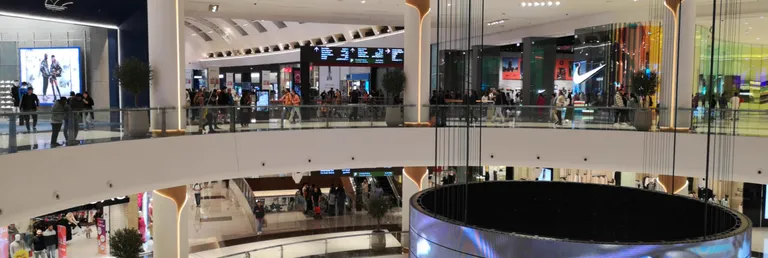

Modern technical infrastructure management in shopping centres is more than technical integration — it is the ability to adapt systems to specific applications. Shopping centres, due to their scale, number of tenants and traffic intensity, require a particular approach to security system visualisation.
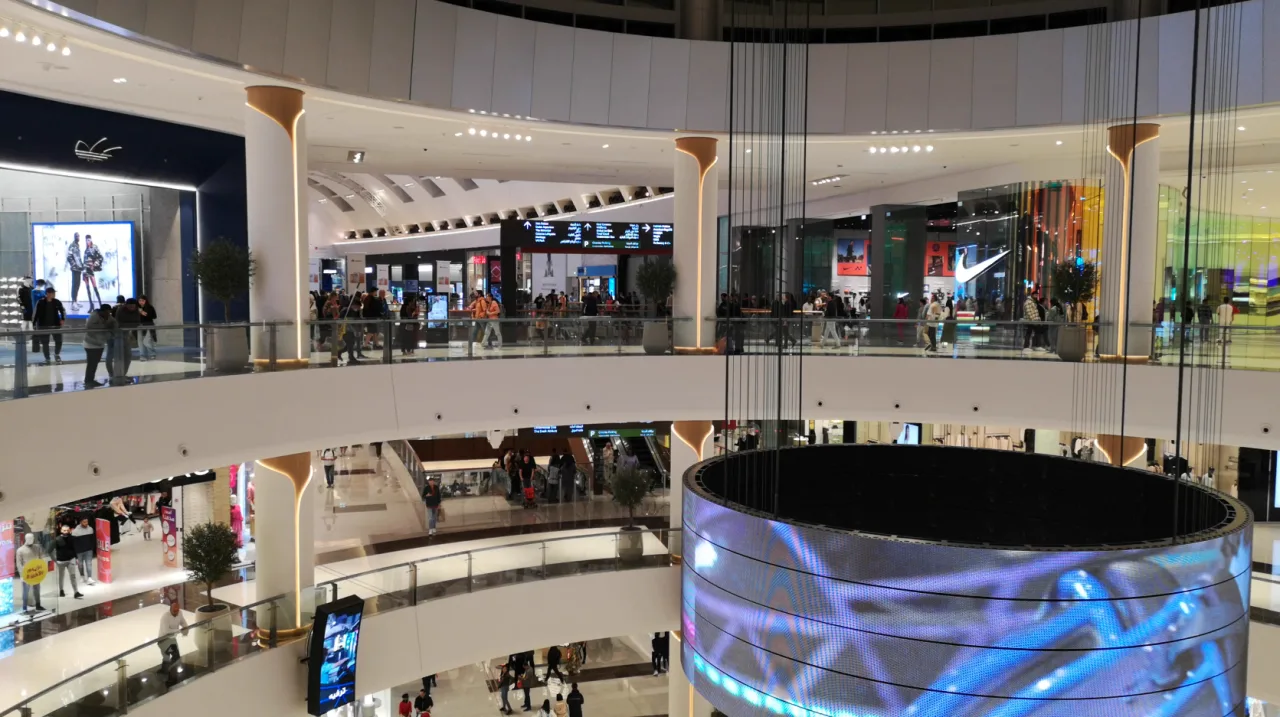
The Dubai Mall — the largest shopping centre in the world, an example of a facility of enormous scale requiring advanced security visualisation.
Below are three key areas to consider when deploying a security system integration platform in a retail facility.
Map
Integration systems should include shop names and numbers consistent with the facility documentation used by tenants and property managers. The security system operator must have no doubt when diagnosing a location — maps must be clear and lag-free.
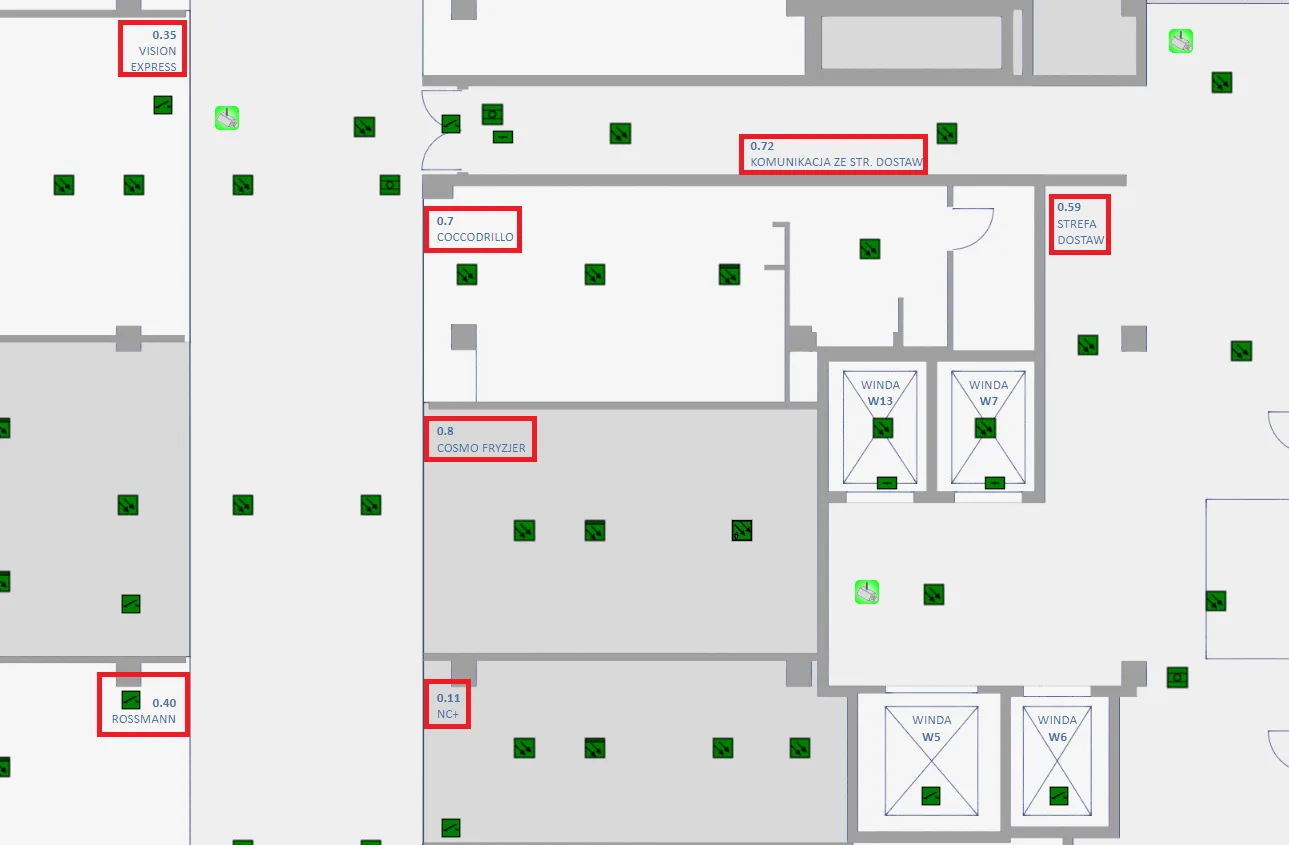
A readable map with shop names and numbers matching the facility documentation — the foundation of effective visualisation.
For large retail facilities, vector graphics (CAD, SVG) are mandatory, ensuring readability regardless of the zoom level. A raster map becomes illegible at high zoom, which is unacceptable in an alarm situation.

Vector graphics maintain full readability regardless of zoom level — a critical feature for large-scale facilities.
It is worth noting that maps often remain unchanged for years despite continuous layout changes and tenant migrations. The lack of up-to-date room descriptions hampers staff performance, especially in critical situations such as fire or evacuation.
Integrations
The standard scope of integration covers fire alarm systems (FAS), intrusion and hold-up alarm systems (IHAS) and video surveillance (CCTV). In the case of shopping centres, however, it is worth going beyond this standard and extending the integration to additional systems:
- CO/LPG detectors in underground car parks,
- key depositories,
- call systems in disabled toilets,
- access monitoring for these rooms,
- parking systems,
- variable message boards (digital signage).
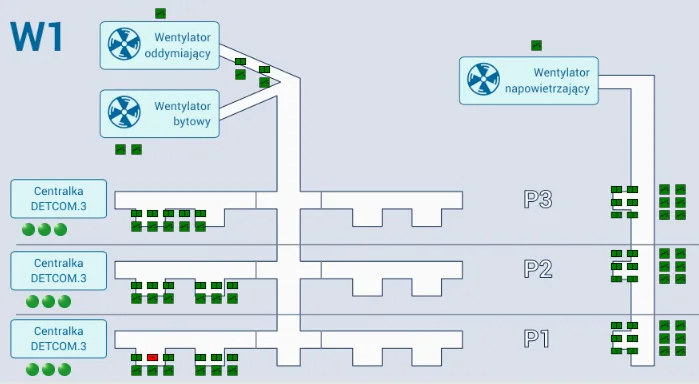
Extending integration beyond the standard FAS+IHAS+CCTV scope allows the visualisation to cover all key systems in a retail facility.
Integrating cameras with intercoms at disabled toilets enables prompt and convenient verification of access permissions. This is an example of a practical solution that improves both security and operational convenience.
Synergy
A well-designed integration system provides automatic links between alarm points and video surveillance cameras. However, simply displaying a live feed is not enough.
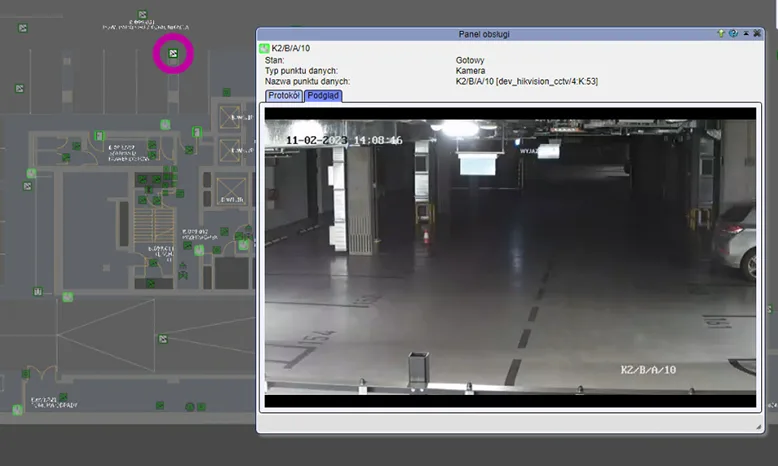
Linking an alarm to a camera — the system automatically displays a recording from before the event and zooms in on the alarm area.
An effective system should automatically display a recording with a timestamp — for example, 10 seconds before the event — and zoom in on the area of the incident. This gives the operator complete evidential material without having to search through archives.
In the area of access control, alarms related to a door being held open for too long may require verification. The integration system can automatically provide a camera feed assigned to the given door and establish an intercom connection — without the need to dispatch a staff member to the scene.
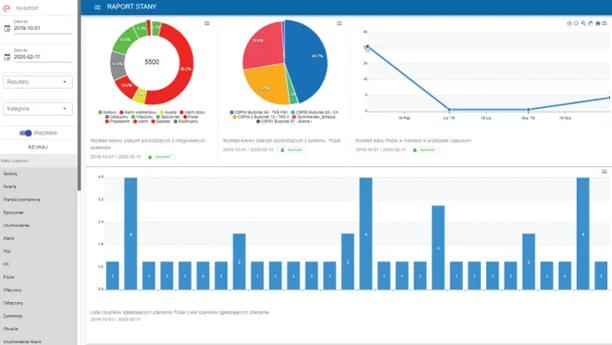
Automatic verification of access control events — camera feed and intercom connection without dispatching a patrol.
The high volume of events in retail facilities sometimes leads to a situation where it is unclear what is the cause and what is the effect. Clear indicators and dedicated reporting modules form the basis for analysing and repairing systems — and thereby raising the facility’s security level.