

The number of passengers is growing, and so is the responsibility of the people and teams ensuring security at railway stations and airports. When an alarm event occurs at such a facility, a delayed train or flight may turn out to be the least of the problems.
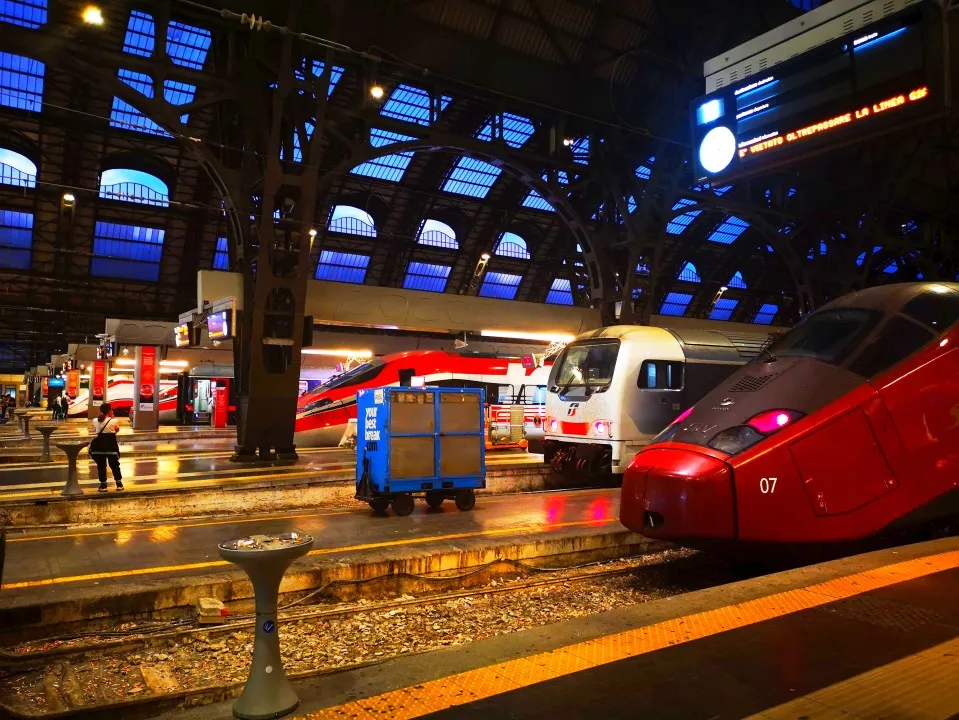
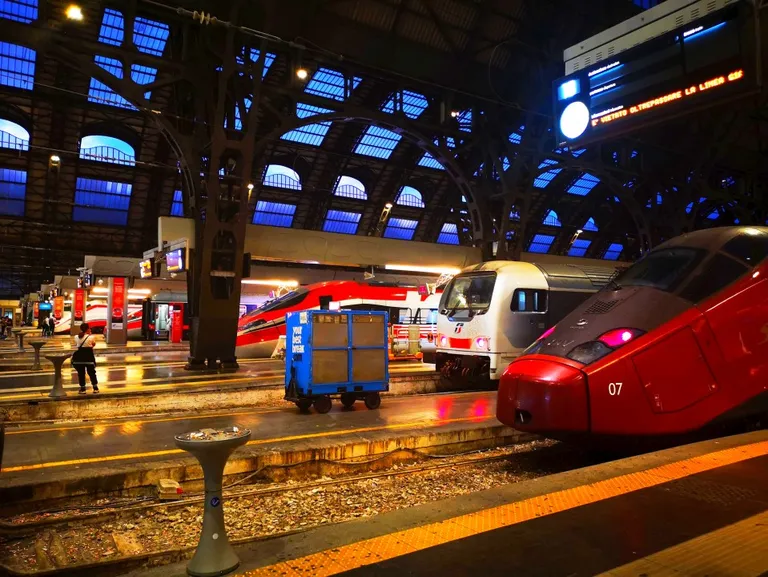
Stazione di Milano Centrale – the largest railway station in Milan and one of the largest railway stations in Europe [own photo]
Modern integration platforms enable a range of solutions that help facility technical staff better prepare for potential threats and shorten response times to alarm events — related not only to fire, but also to vandalism or even terrorism.
Below are three examples of such solutions offered by a professional security system visualisation environment — all presented in the context of the highly complex evacuation process at railway stations and airports.
Evacuation — how to prepare?
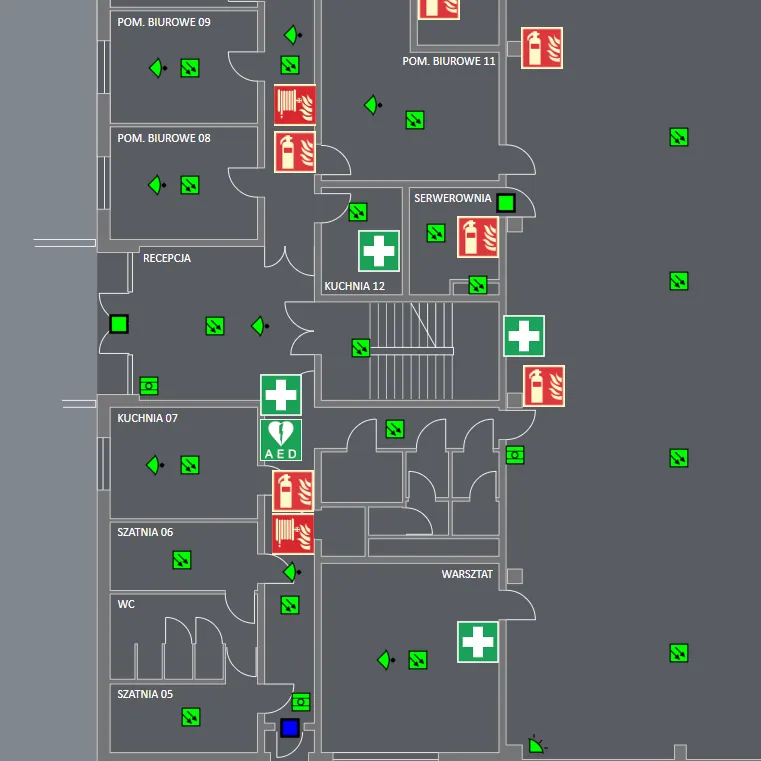
An example of visualisation in the GEMOS integration environment, featuring not only point smoke detectors or intrusion detection lines, but also symbols indicating the location of elements such as fire extinguishers, hydrants, AED defibrillators and first-aid kits.
If the technical staff know the facility well, the probability of handling an emergency or alarm situation effectively increases. Hence the idea that a visualisation system should be a kind of “information hub” about the facility, rather than serving solely to pinpoint the location of an alarm.
Visualisation systems — designed, deployed and customised for the facility by interdisciplinary professionals — are used every minute of the facility’s life, maximising the potential of integration technology. Operators and technical staff can verify the status of monitored devices and at any time review, among other things:
- the layout of all evacuation routes;
- the location of all first-aid kits, fire extinguishers, hydrants, AED defibrillators and fire cut-off switches;
- the layout of smoke and fire zones.
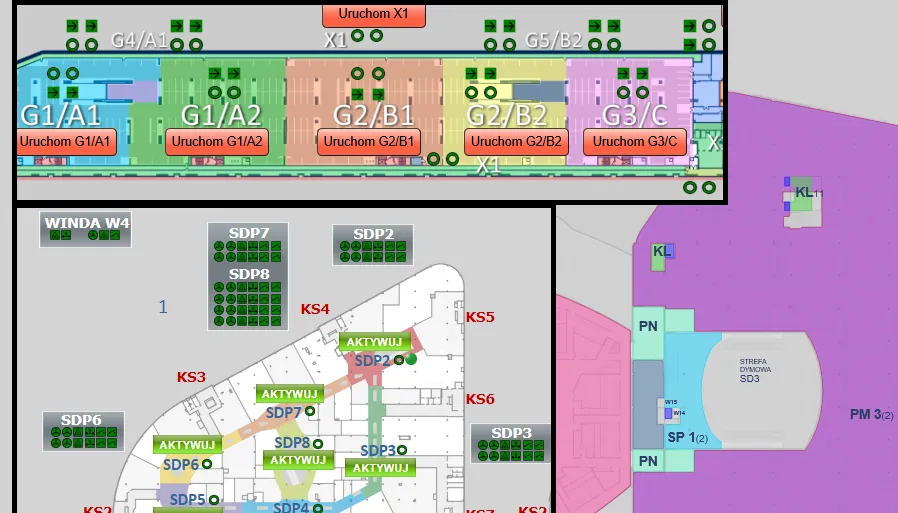
Examples of smoke and fire zone visualisation in the system. In the cases presented, a complete control sequence corresponding to a fire scenario can also be triggered manually.
You can either browse through folders and run periodic training sessions based on often outdated printouts, or have all that knowledge at your fingertips (or rather, under your mouse) in a single integration environment. The choice seems obvious.
We are talking about railway stations and airports whose area often reaches hundreds of thousands of square metres — knowing the evacuation routes or the location of hydrants is a detail that can genuinely impact the effectiveness of the evacuation process in a fire emergency.
Evacuation — how to respond?
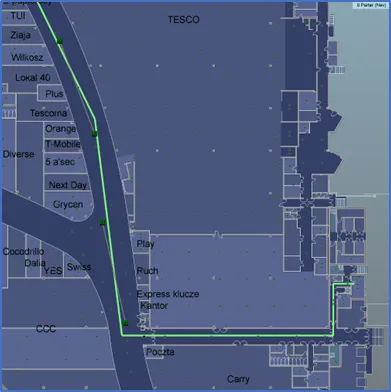
What is the shortest route from the monitoring room to the detected alarm location? A properly configured visualisation system will automatically display the most optimal option to operators the moment an alarm is reported.
The more routine tasks the integration system takes over during an alarm, the more time the technical staff will have for coordination and on-site operations. Such a system, properly configured for a facility like a railway station or airport, enables, among other things:
- displaying warning and/or alarm messages on dynamic passenger information boards;
- automatically generating and printing a camera snapshot from the camera nearest to the ROP alarm point or SOS column;
- immediate distribution of notifications to all persons who should be informed about the event (dedicated mobile app, SMS messages, e-mail messages).
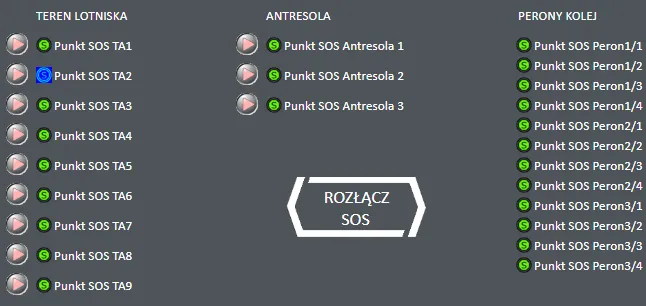
Integration with intercom modules or SOS columns complements the GEMOS platform well, especially when the system also includes video surveillance cameras, enabling alarm camera automation.
In an alarm situation, the range of functionalities offered by the integration platform is of critical importance. Key is the implementation of bi-directional communication, which allows operators to send commands to integrated systems — for example, disconnecting a linear detector in the fire alarm system, triggering an evacuation message on the voice alarm system for specific zones, or locking passages managed by the access control system in case of an emergency area closure.
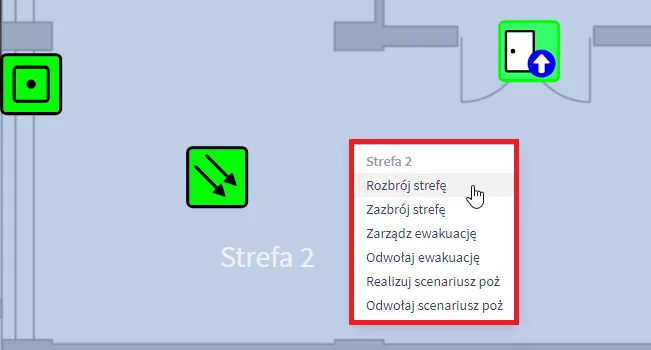
Controls can be executed from many areas of the expanded integration environment, but it is important to provide one that is convenient for the operator — here an example of a context menu, also accessible directly on the site plan.
In fire safety infrastructure management, special attention should be given to the technological separation of the detection area and the control area, recommended particularly for large and complex facilities such as railway stations and airports.
Evacuation — how to draw conclusions?
False alarms are costly — and not only in purely financial terms, but also in terms of reputation. Large-scale transport facilities are equipped with thousands of detectors. Each of these devices can report multiple states related to alarms, faults, or service notifications.
It is increasingly recognised that the key to combating false alarms is a thorough analysis of the current state of installations. The integration system should provide clear indicators that show facility managers and technical staff which points of the visualised installations are problematic.
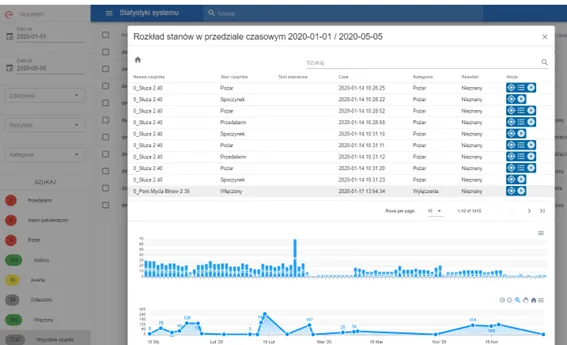
Alarm events can be analysed from printouts of alarm control panels or exported text event histories. But there is a better way — dedicated reporting modules available in the integration environment, in this case GEMOS.
Simply deploying a visualisation system is not always sufficient — the task should be entrusted to experienced “integrators” who can customise a professional integration environment to meet the needs of specific people at specific facilities, including those in the transport sector.