
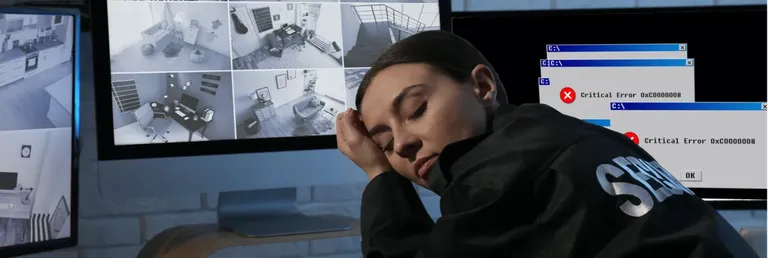

The level of security in a protected facility is a result of both the technical and organisational solutions in place. Equipping a facility with hundreds of cameras, perimeter protection, access control, and many other systems can lead to a so-called “security paradox” — where the volume of information flowing in per unit of time paralyses the security personnel. Monitoring multiple cameras and responding to incoming alerts from various systems causes stress, and when combined with false alarms, it can even lead to a perceptual shutdown.
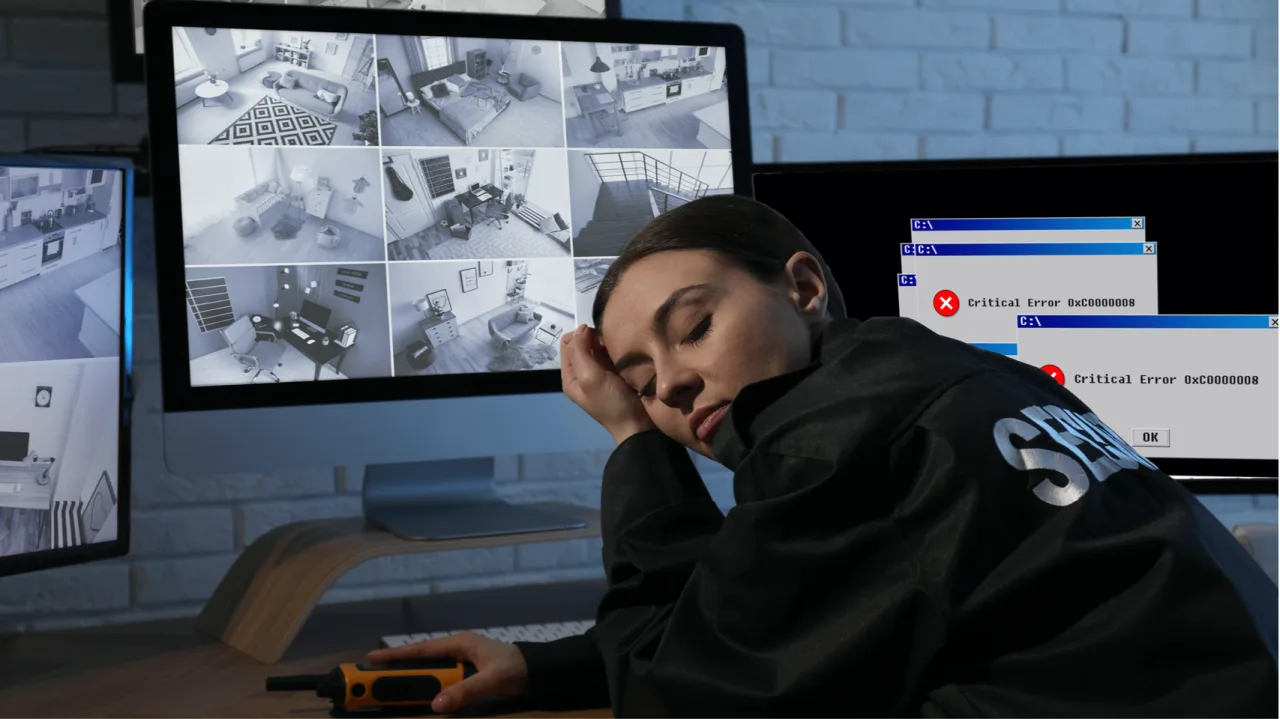
An overload of information from multiple systems can paralyse security personnel.
In such situations, a PSIM system provides essential support by enabling the operation of multiple systems simultaneously. PSIM systems have been supporting security personnel for years through a unified operating interface that allows staff to focus on the event itself without having to master the operation of each system individually. Hundreds, even tens of thousands of events sent by individual systems integrated on the PSIM platform are automatically sorted — routine information is collected in the background without demanding operator attention. Thanks to analytical modules, the number of false alarms can be reduced relatively quickly, thereby stabilising the security station.
Technology is not everything
However, equipping a facility with a modern and ergonomic solution such as a PSIM system does not guarantee security if the operating personnel (facility security) are not properly trained and motivated. In the example below, a situation was achieved in which none of the systems generated false alarms. Routine signals such as “authorised door opening” were logged in the background. In short, peace and quiet reigned in the security room. It seemed this was exactly the goal — allowing security personnel to focus on routine tasks without unnecessary stress.
Many applications have a “timeout” function that logs the user out if they have not interacted with the application for an extended period. PSIM systems work similarly — the system requires the constant presence of an operator regardless of whether a response is currently needed or not. This safeguard prevents unauthorised persons from accessing the computer during the absence of the logged-in user.
The creativity of security guards
What can security personnel do when they know that every system logout (indicating the operator’s absence from the computer) will be logged and used to evaluate their performance?
In one such case, security staff invested in a clock with a second hand. A piece of paper was attached to the second hand to increase its surface area. The computer mouse was then placed on top of this modified clock, simulating mouse movement across the desk. In fact, it was not the mouse that was moving, but the surface beneath it. In this way, the system was fooled, exposing the facility to the danger of no response should the system report an actual incident.
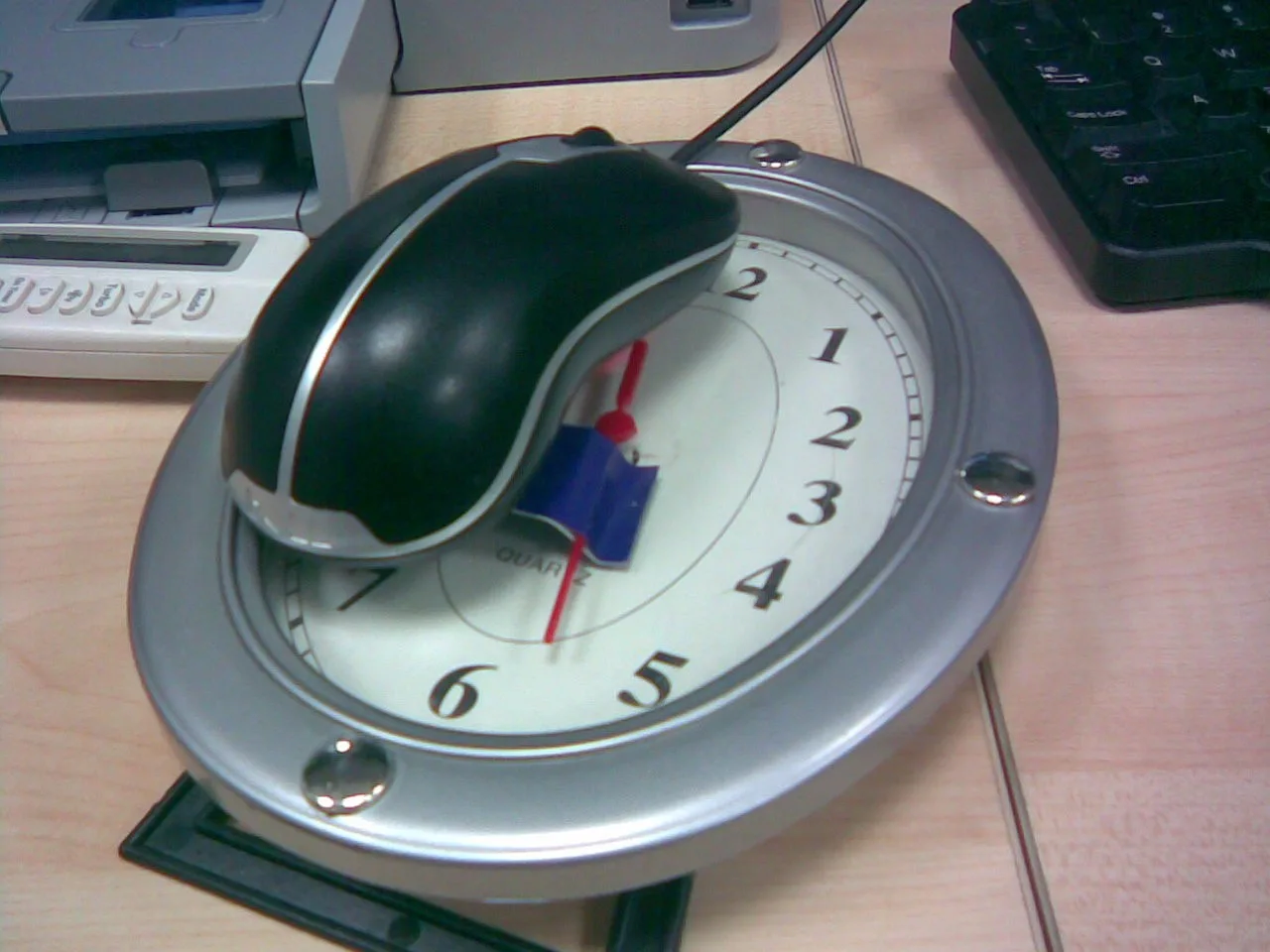
A computer mouse placed on a clock with a second hand — a clever way to simulate operator presence.
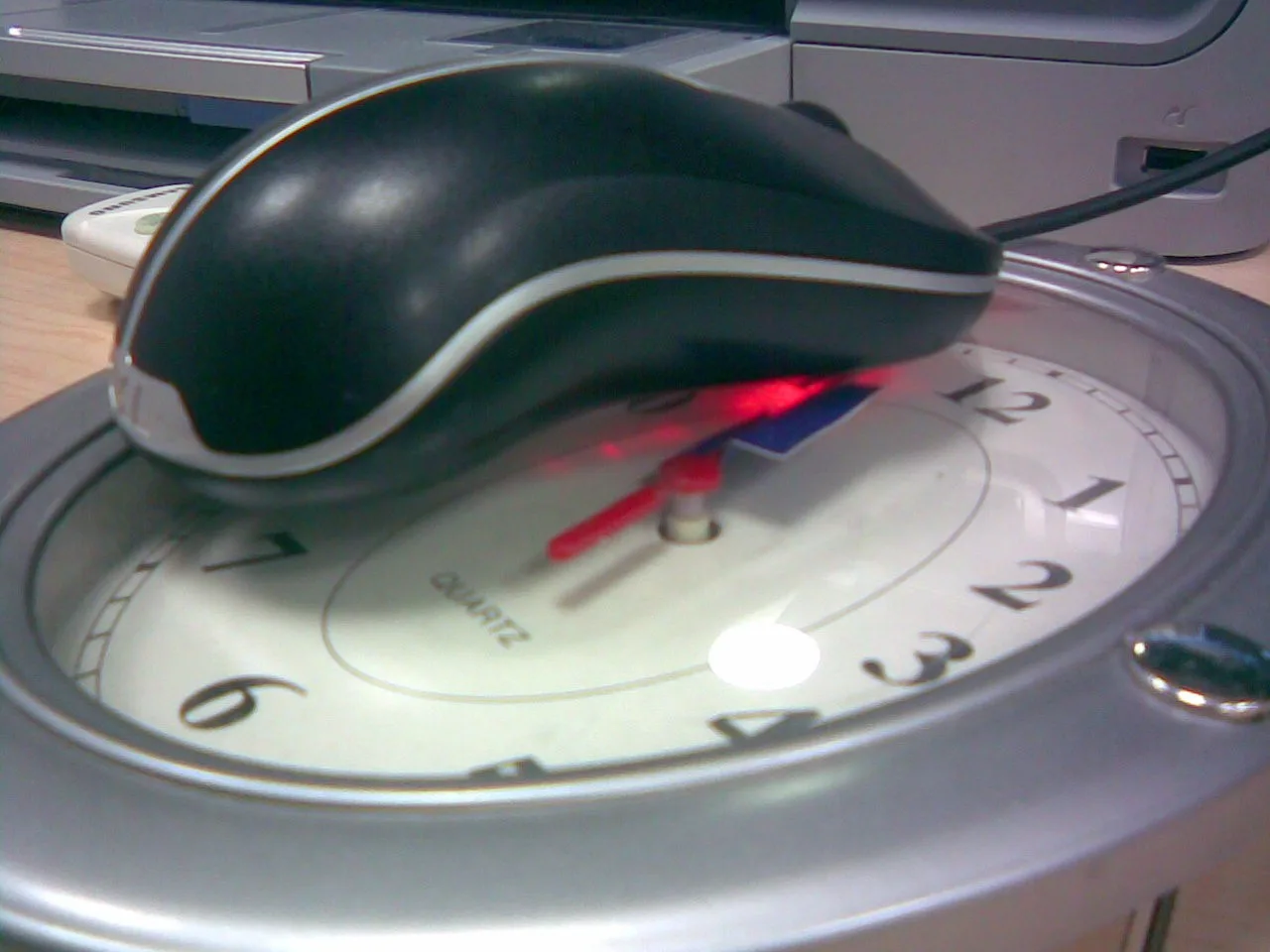
Close-up — the second hand with an attached piece of paper, which simulates mouse movement as it rotates.
Conclusions
This example demonstrates that developing advanced systems such as PSIM requires the continuous development of new functionalities whose need arises from real-world operation.
There is no indication that all possible gaps in security systems can be predicted in advance. Beyond natural evolution driven by the need to keep pace with developing technical security technologies, cooperation between PSIM system manufacturers and physical security experts is essential. It is simply impossible to develop, let alone implement, a PSIM system without the involvement of the people for whom these solutions are created.