


The intrusion alarm system is one of the fundamental elements of security infrastructure in any facility — from office buildings, through museums, to critical infrastructure sites. However, simply installing an intrusion alarm system is just the beginning. Real value emerges when the system is integrated with a PSIM platform and visualised in a way that gives operators full control over protected zones.

The Louvre — the most visited museum in the world. Facilities of the highest cultural significance require advanced intrusion alarm system visualisation [own photo]
In this article, we discuss how advanced intrusion alarm visualisation in a PSIM environment enables more effective security management — from alarm verification, through zone operations, to hardware health monitoring and time synchronisation.
Zone and detection point visualisation
The foundation of intrusion alarm integration in a PSIM environment is mapping all alarm zones and detection points onto the facility’s site plans. Instead of analysing events as a text list on the alarm panel, the operator sees them in spatial context — knowing exactly which zone triggered the alarm and where individual detectors are physically located.
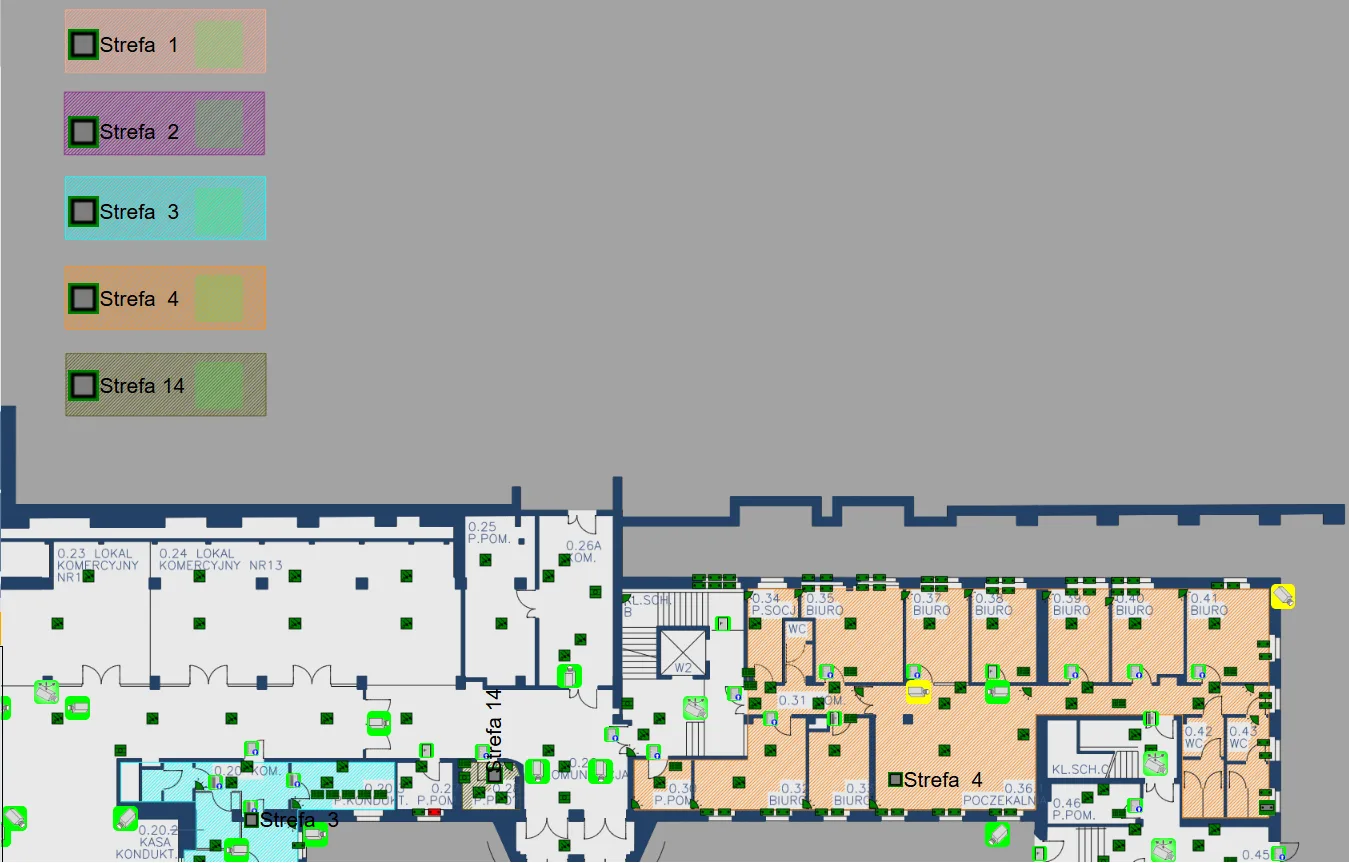
Intrusion alarm zone visualisation on a facility site plan in the GEMOS integration environment. The operator sees the status of each zone in the spatial context of the building.
The visualisation covers not only the location of motion detectors, magnetic contacts or infrared barriers, but also their current status — ready, alarm, tamper or fault. This gives technical staff a complete picture of the situation without having to physically check each element of the installation.
Double alarm verification
One of the most important aspects of integrating an intrusion alarm system with a PSIM platform is the ability to implement double verification mechanisms. When an intrusion detector triggers, the operator can immediately verify the event using a CCTV camera associated with the given zone.
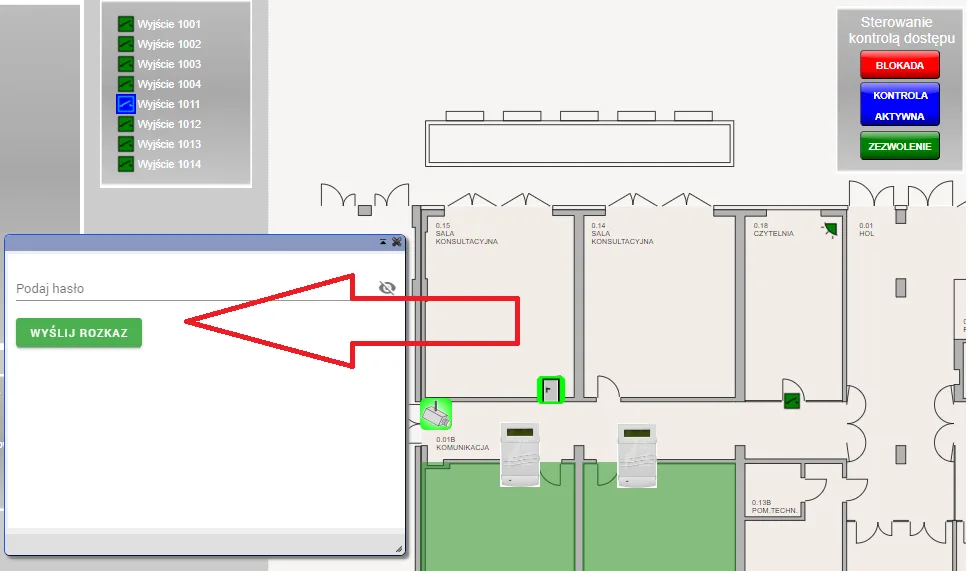
The double alarm verification mechanism — an intrusion alarm event automatically triggers a view from the nearest camera, allowing the operator to assess the situation immediately.
Alarm camera automation — the automatic switching of the video feed to the camera nearest to the alarm location — significantly reduces response time. In facilities with hundreds of detectors and dozens of cameras, manually searching for the correct view would be time-consuming and error-prone. The PSIM platform eliminates this problem by automating the verification process and delivering the associated video feed the moment an alarm is reported.
Zone operations — arming, disarming and silent alarms
Professional intrusion alarm integration in a PSIM environment also includes the ability to remotely control zones. From the visualisation interface, the operator can perform operations such as:
- arming and disarming selected alarm zones;
- activating silent alarms — notifying response services without triggering acoustic signalling on site;
- remotely resetting zones after an alarm has been handled.
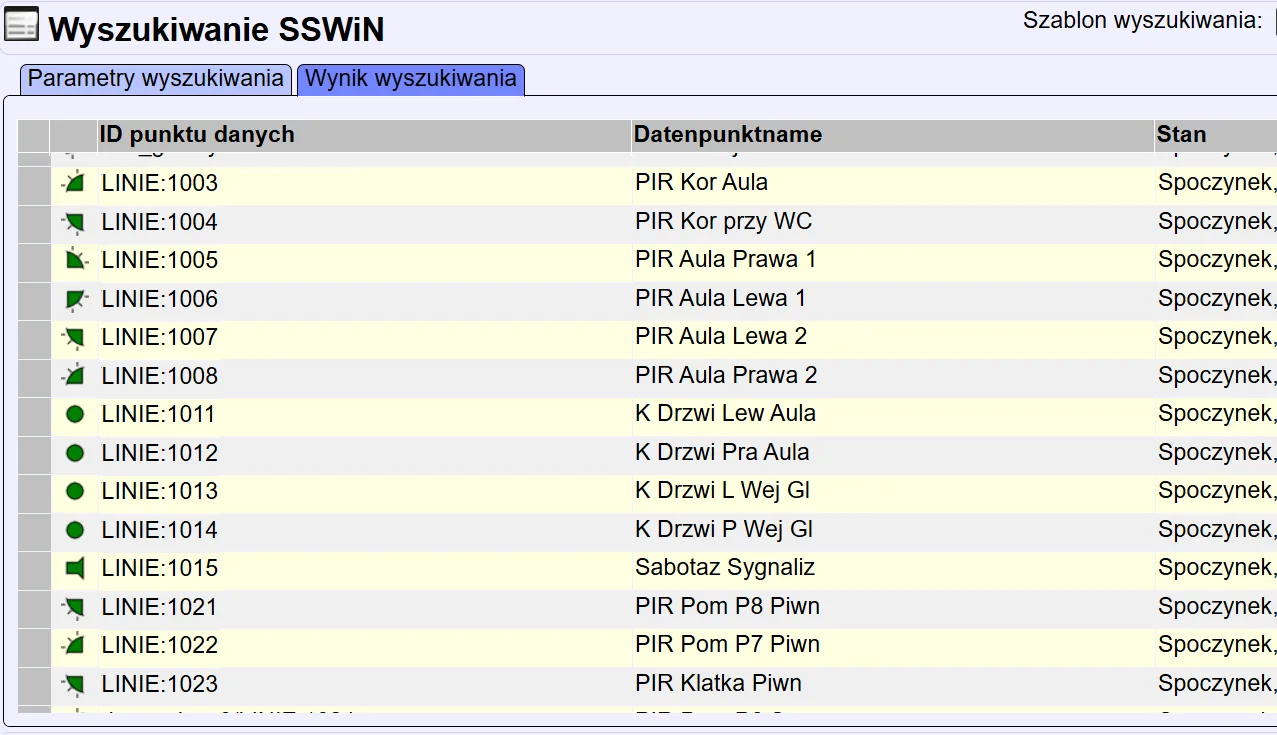
The zone control panel in the GEMOS environment — the operator can arm, disarm or reset a selected zone directly from the site plan.
The silent alarm function is particularly important in situations where an overt response could endanger people on site. The PSIM platform allows the configuration of scenarios in which a silent alarm automatically initiates a series of actions — from notifying the appropriate services, through recording video from cameras, to locking selected passages in the access control system.
Hardware health monitoring
Intrusion alarm visualisation is not only about responding to alarms. Equally important is ongoing monitoring of the hardware health of the entire installation. The PSIM platform enables visualisation and logging of states such as:
- power supply failures in control panels and expanders;
- tamper of detector and module housings;
- loss of communication with individual system components;
- low battery voltage conditions.
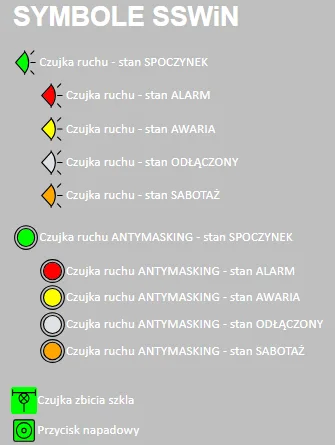
Hardware health monitoring of the intrusion alarm installation — visualisation of faults, tamper events and service states enables technical staff to carry out proactive system maintenance.
Such proactive monitoring allows technical staff to address problems before they escalate into serious failures. The integration system collects a history of all service events, enabling trend analysis and maintenance planning based on actual operational data.
Time synchronisation
In an environment where multiple systems work together — intrusion alarm, CCTV, access control, fire alarm — a unified time base is essential. Differences between the clocks of individual control panels and servers can lead to situations where correlating events from different systems becomes ambiguous.
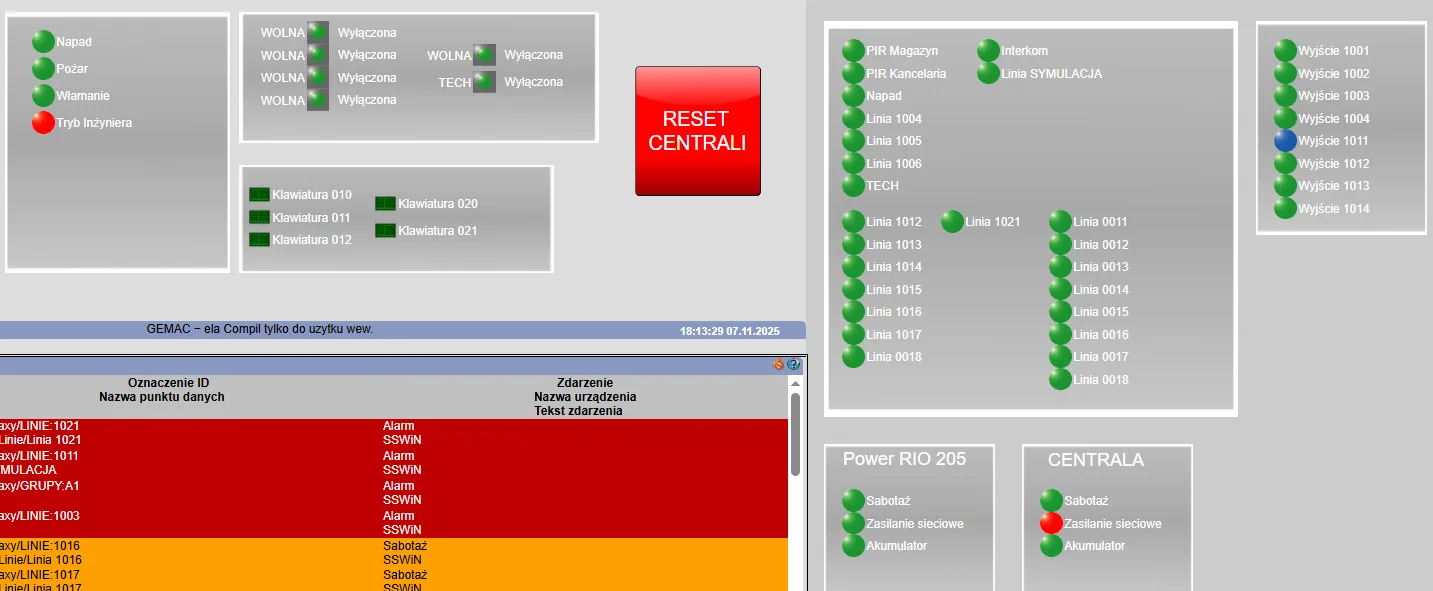
Time synchronisation across all integrated systems eliminates ambiguities when correlating alarm events — a key element of professional integration.
The PSIM platform synchronises time with all integrated systems, ensuring timestamp consistency across the entire environment. As a result, post-incident analysis — for example, comparing the moment an intrusion detector triggered with the video recording from a camera — is based on reliable, synchronised data.
Time synchronisation is particularly significant in the context of formal and audit requirements, where precise timestamps form part of security event documentation.