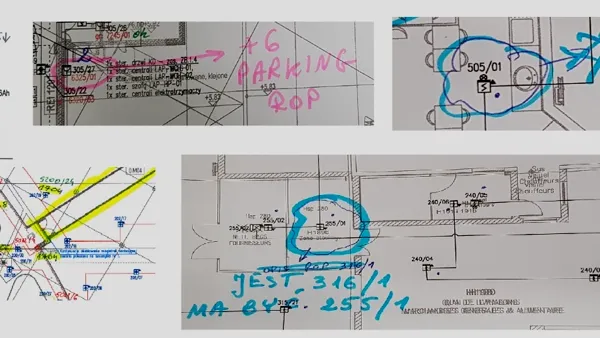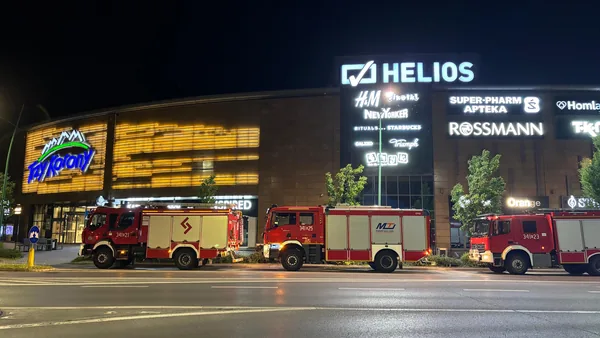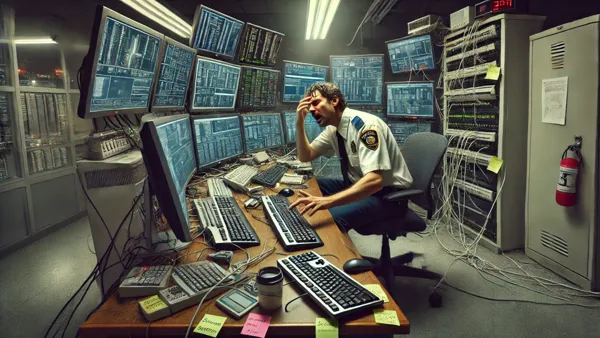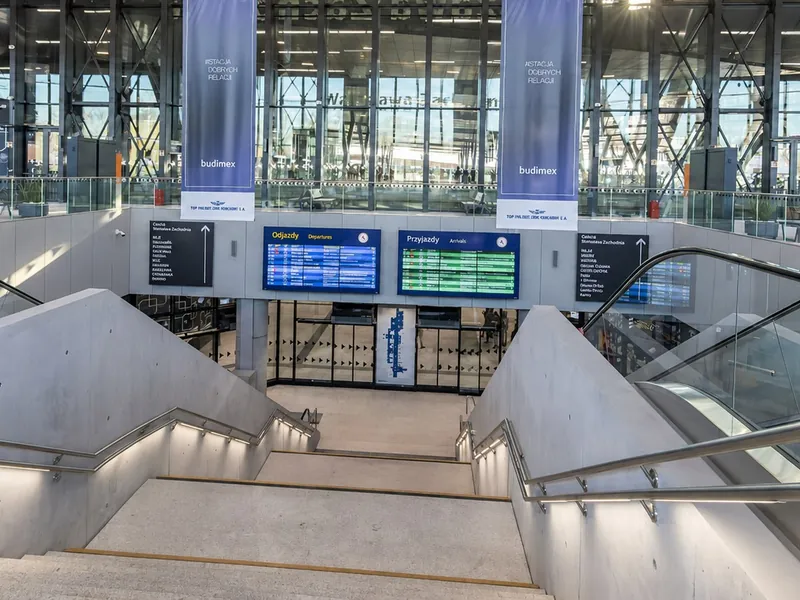

A railway station, hall, tunnel, underground passage and satellite facilities form one extensive system. Each part has its own devices, installations and dependencies. During an alarm, however, they all need to work as one system. At Warszawa Zachodnia, this means coordinating around 9000 data points. The key was a clear division of roles between GEMOS and FPM+.
Warszawa Zachodnia: a fire scenario for a large railway facility
Warszawa Zachodnia is not just one building, but an extensive, multi-zone infrastructure: a station, hall, tunnel, underground passage and satellite facilities. At this scale, detecting a fire is only the beginning. It is equally important to translate the fire scenario into concrete control actions, device monitoring and clear information for the operator.
The real challenge begins after the alarm. The right actions must be started, device states must be checked, the operator must receive the necessary context and many installations must work together. The system must not only comply with the documentation. It must be predictable during an alarm, possible to test and understandable to the person operating it.
In brief
- The Warszawa Zachodnia integration covers around 9000 data points.
- The GEMOS operator layer organises the situation picture and context for the operator.
- The FPM+ execution layer carries out fire protection control actions and supervises device states.
- The FPM+ installation includes three MASTER panels, more than 60 eUPS modules and more than 40 eLSK modules.
- The key verification chain is: command → execution → feedback.
When one alarm triggers dozens of dependencies
In a small building, a fire scenario may cover a limited number of devices and simple control actions. At Warszawa Zachodnia, it covers many zones, disciplines and installations: from the fire alarm system and voice alarm system, through fire protection automation, to monitoring, visualisation and operator work.
GEMOS integrates, among other things, systems and interfaces related to fire detection, CCTV monitoring, operator workstations, fire protection automation and the transmission of device state information. The main control centre has an operator workstation with three GEMOS monitors and two CCTV monitors. Additional workstations in railway control rooms make it possible to observe individual platforms and receive basic fire notifications.
At this scale, the operator cannot build a picture of the situation independently from many screens and messages. The system should provide information in an order that supports event assessment and response.
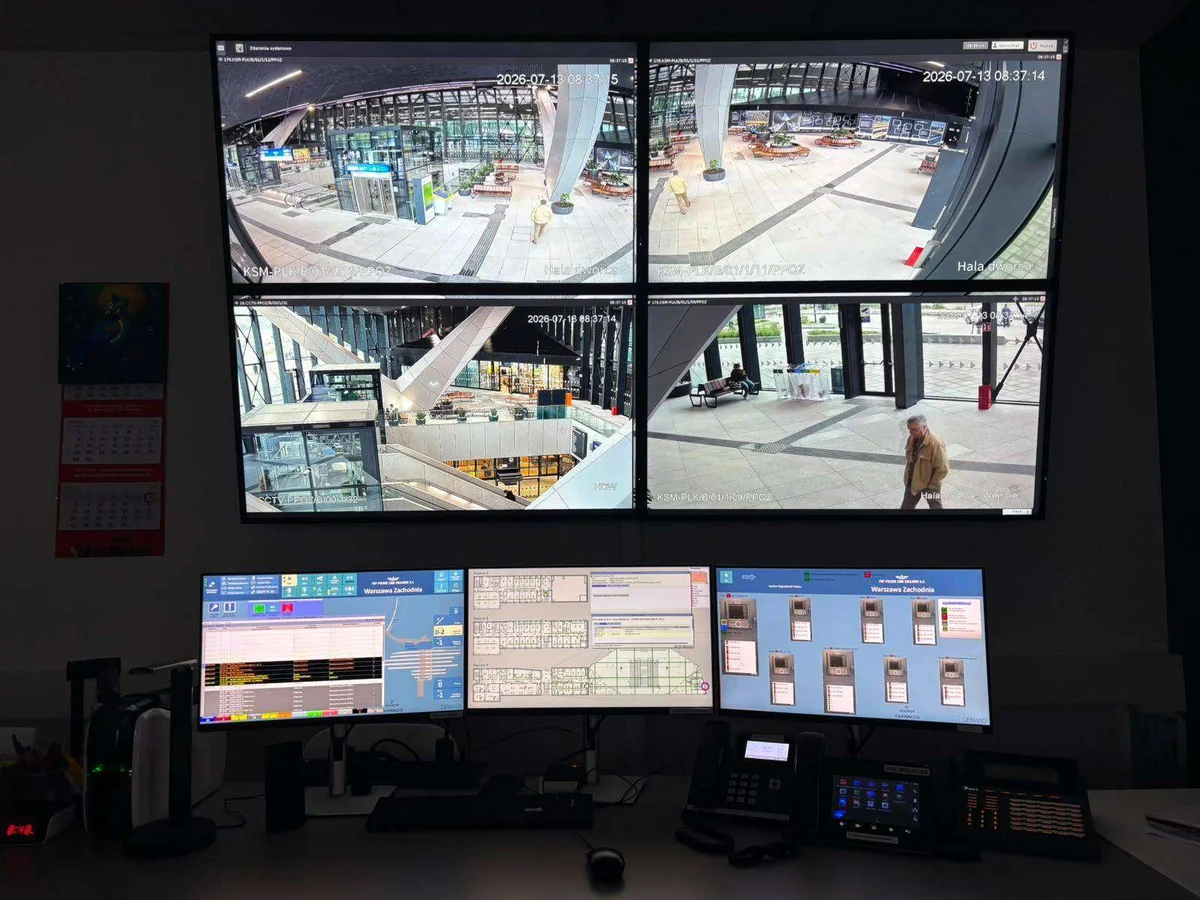
Operator workstation at Warszawa Zachodnia — camera images, GEMOS visualisation and the information needed to handle events in one place.
Two systems. Two clearly defined roles
The solution was organised around a clear division of responsibility. The operator and integration layer did not take over the tasks of the execution layer. Each system is responsible for the area for which it was designed.
| Area | GEMOS | FPM+ |
|---|---|---|
| Main role | Integrates information and shows the operator the situation picture | Executes fire protection control actions and supervises device states |
| Operator perspective | Alarm location, context, related data and camera image | Confirmation that the device performed the required action |
| Scope of responsibility | Supports the person assessing the event | Executes the logic and dependencies of the fire scenario |
| Practical effect | Less switching between systems | More predictable execution of control actions |
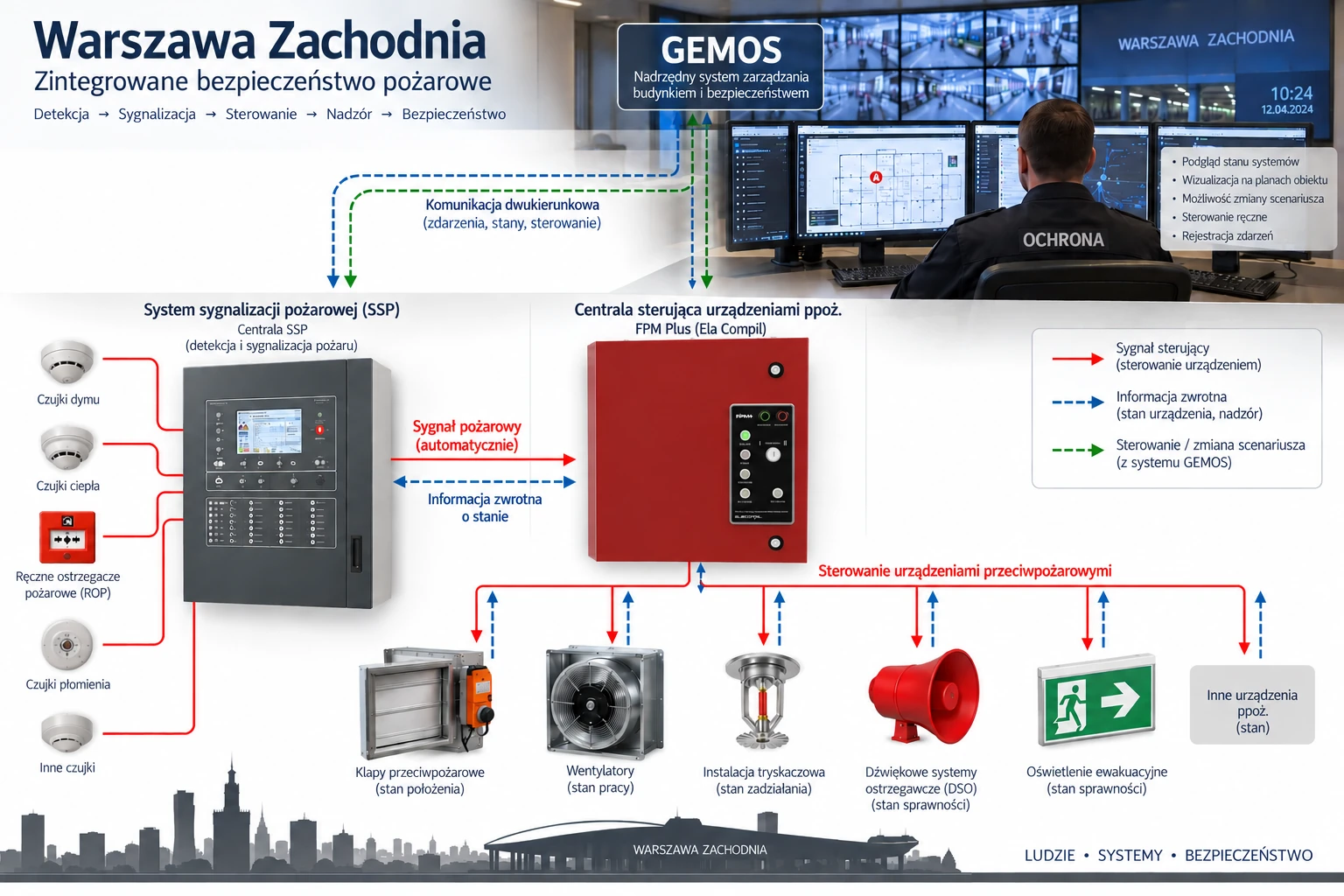
Division of roles between the GEMOS (SIUP) system and the control panel in the context of implementing the fire scenario.
GEMOS: the situation picture and context for the operator
The GEMOS platform integrates data from many systems, presents it to the operator and correlates events. It can also automatically link an alarm to the image from the relevant camera. The operator therefore sees more than a message. They receive the location, sources of related data and the context needed to make a decision.
The article what is PSIM explains this role in more detail: an integration system does not replace the devices in a facility, but organises information and supports people handling events.
FPM+: executing the scenario and supervising devices
The FPM+ panel executes fire protection control actions, supervises device states and organises the dependencies defined in the fire logic. This is the layer where a command is sent to the right device and its execution is confirmed.
One system helps people understand what is happening. The other makes sure that the devices perform the right actions. This keeps visualisation separate from the direct execution of control actions.
Network of panels and modules
The FPM+ installation at Warszawa Zachodnia included:
- three MASTER panels,
- more than 60 eUPS modules,
- more than 40 eLSK modules.
The numbers show the scale of the project. More important, however, is that the extensive installation was based mainly on two repeatable module types. The complexity of the facility was not transferred into the hardware. It was handled through designed logic and a consistent execution structure.
eUPS: the signal comes in, the right control goes out
eUPS modules handle alarm and technical inputs as well as control outputs for fire protection devices. They are used to implement the dependencies resulting from the fire scenario.
Repeatability has practical value. The designer and integrator do not need to create a new hardware arrangement for every zone. They work with a known structure that can be applied consistently in different parts of the facility. This makes commissioning, testing and later maintenance easier.
eLSK: more than just “open” or “closed”
eLSK modules were used primarily for digital control and monitoring of fire dampers. With a large number of devices, information about a damper’s position may not be enough. It is also important to know whether the device performed the command and whether its state is correctly visible in the system.
Digital supervision keeps the picture clear as the number of devices grows. The operator receives more reliable information, while the technical team gets a better basis for diagnostics.
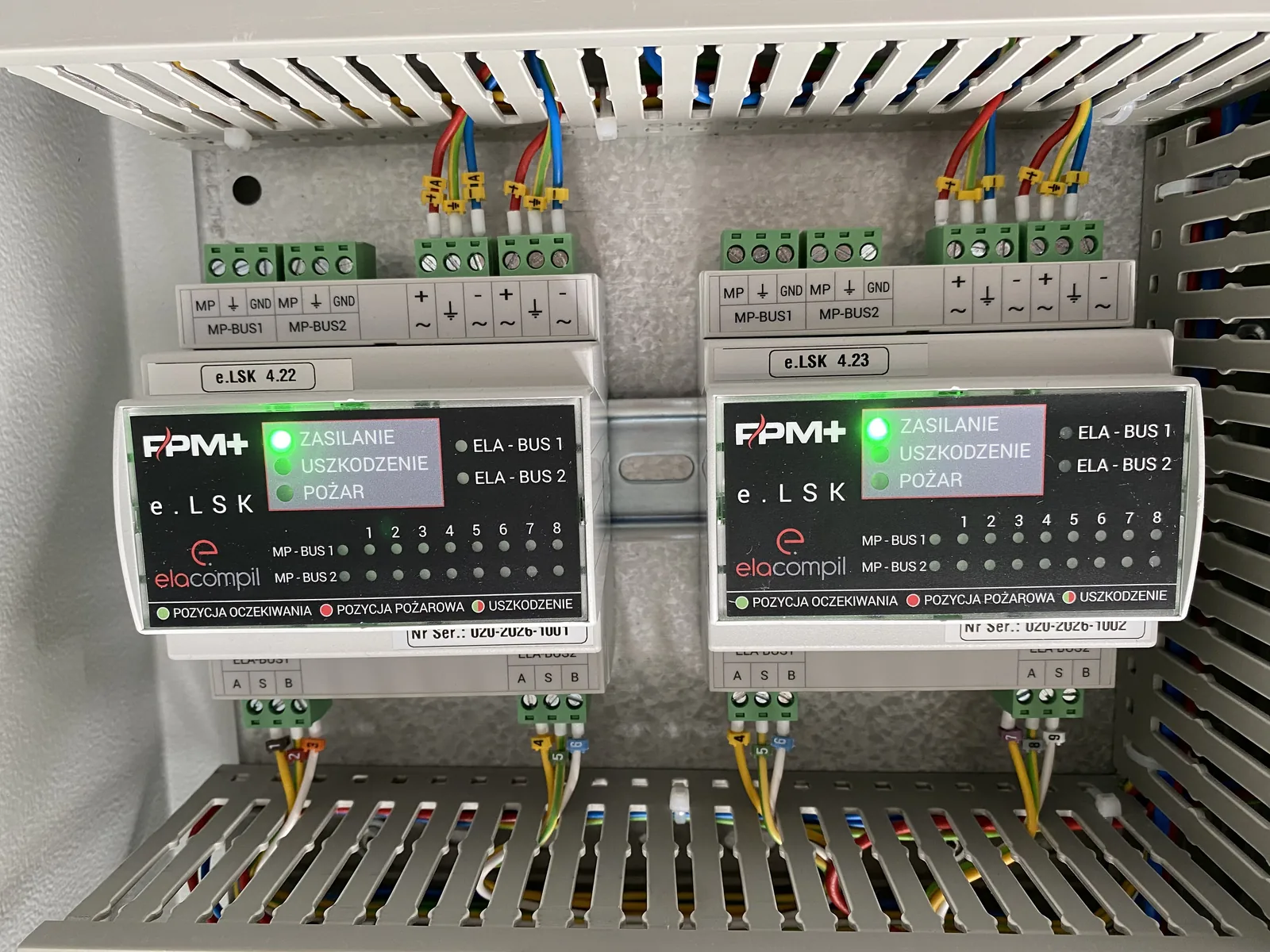
Illustration of eLSK modules used to control and monitor fire protection devices.
Why simplicity matters in large projects
The larger the facility, the more dependencies must be designed, commissioned, tested, documented and maintained. Every additional exception increases the risk of error. This is why a small number of repeatable elements is an advantage, not a limitation.
Repeatable architecture makes it easier to:
- stage the implementation without changing the basic hardware logic,
- keep zones and disciplines consistent,
- test cooperation between many installations,
- identify a device that has not reached the required state more quickly,
- service, expand and train personnel later.
In an investment such as Warszawa Zachodnia, this means more than a simpler technical architecture. It also makes the commissioning process more predictable.
How to check whether the fire scenario really worked
In a large facility, it is not enough to confirm that an alarm appeared on the screen. A test should cover the entire chain of action, from the input signal to the feedback. In practice, four elements must be checked clearly:
- whether the correct alarm or technical signal was received,
- whether the scenario logic started the right command,
- whether the device performed the expected action,
- whether feedback returned to the system and is clear to the operator.
This division makes it possible to check the event presentation and the execution layer independently. It also makes it easier to locate a problem: in the alarm source, logic, communication, device or visualisation.
During commissioning, it is worth using repeatable tests and clearly defined acceptance criteria. This way of working confirms that the entire fire scenario works, rather than only individual devices. More practical examples are provided in the article about preparing the acceptance of fire protection installations.
The most important effect: complexity stays under control
At Warszawa Zachodnia, visualisation and operator work were separated from the direct execution of fire protection control actions. GEMOS collects and presents information from integrated systems, while FPM+ executes the scenario and supervises device states.
This makes it possible to verify separately what the operator sees and what the devices do. The repeatable module structure also makes it easier to test additional zones and identify elements that have not reached the required state.
In a facility with around 9000 data points, the ability to check the command, its execution and the feedback is not an extra feature. It is the basis for correct commissioning and later system operation.
Security standards for critical infrastructure
In facilities of strategic importance, the requirements for automation and visualisation go beyond physical reliability. New European legal frameworks place particular emphasis on protecting critical infrastructure against cyberattacks. Secure integration is based on systems that use standardised data protection mechanisms.
The GEMOS platform provides encrypted communication and supports stable and secure operation of the entire facility, protecting the integrity of the information being transmitted.
FAQ
- How many data points were included in the Warszawa Zachodnia integration?The GEMOS installation covered around 9000 data points from many security systems and technical installations.
- What role does GEMOS play?GEMOS integrates and presents information, correlates events and gives the operator context, such as the alarm location and the image from the relevant camera.
- What role does FPM+ play?FPM+ executes fire protection control actions, supervises device states and carries out the dependencies defined in the fire scenario.
- What were the eUPS and eLSK modules used for?eUPS modules handle alarm and technical inputs as well as control outputs. eLSK modules are used primarily for digital control and monitoring of fire dampers.
- Why is the division of roles between GEMOS and FPM+ important?It separates the situation picture and the operator's work from the direct execution of control actions. This makes it easier to test each layer and find the source of a problem.
- What does a repeatable module architecture provide?It makes staging, commissioning, testing, documentation and servicing easier. The team works with a known structure instead of creating separate hardware arrangements for every zone.