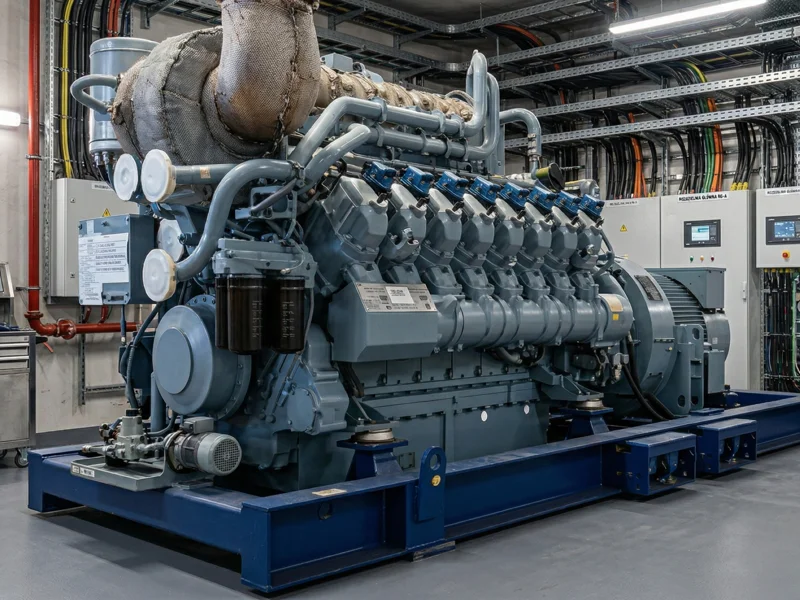


Power generators play a crucial role in fire protection systems, ensuring an uninterrupted supply of electrical energy. They are essential for the operation of fire suppression equipment, alarm systems, emergency lighting and other critical safety systems. In a situation where a fire damages the main power grid or a power failure occurs, generators are the first line of defense, enabling fire pumps, smoke ventilation and other devices that protect life and property to continue operating.
Generators play an important role in buildings with a high fire risk, such as hospitals, schools, data centers and industrial facilities, where continuity of power supply is required. In many countries, their installation in such facilities is mandatory.
To ensure generators are always ready to operate, they require regular inspections and maintenance. This includes load testing, checking the condition of batteries, fuel levels, and control and alarm systems. Key generator operating parameters must be monitored both in standby mode and during automatic start-up in the event of a mains failure.
Key aspects to monitor
Fuel level and quality — regular checking of fuel level and quality is critical, as contaminated or old fuel can lead to generator failure.
Battery condition — batteries must be regularly inspected and replaced when they lose efficiency, as they provide the energy needed to start the generator.
Engine operating parameters — temperature, oil pressure and engine speed are indicators that may point to problems requiring immediate intervention.
Generator efficiency — output voltage and frequency should be monitored to ensure stable and safe power supply.
Cooling system — regular inspection of coolant level and quality as well as the condition of the radiator and pumps prevents overheating.
Filter condition — air, oil and fuel filters must be clean to maintain generator operating efficiency.
Alarm and control systems — regular testing of alarm and control systems enables rapid response to any anomalies.
By using modern technologies such as the GEMOS application for remote supervision and monitoring, it is possible to effectively manage the supervision and maintenance process of power generators.
Using the GEMOS system to monitor electrical parameters of power supply circuits
The GEMOS application is advanced software supporting building parameter management. Instead of operating individual systems on dedicated applications provided by their manufacturers, these systems can be integrated into a single system with a clear and unified visualization. Operating many heterogeneous systems becomes ergonomic, making facility management simpler and not requiring extensive staffing.
Built-in analysis and alarm functions allow rapid response to any anomalies, including dangerous incidents such as failures, fires or break-ins.
The GEMOS system communicates with individual devices and systems via dedicated communication interfaces, through which data is collected and commands are sent.
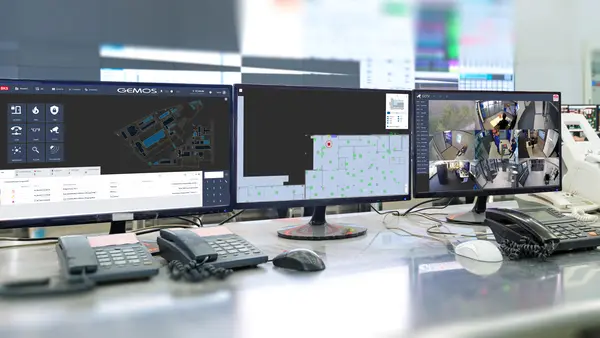
In the presented example, the GEMOS system monitors the entire power supply system, from power generators through UPS units to PDU power distribution strips.
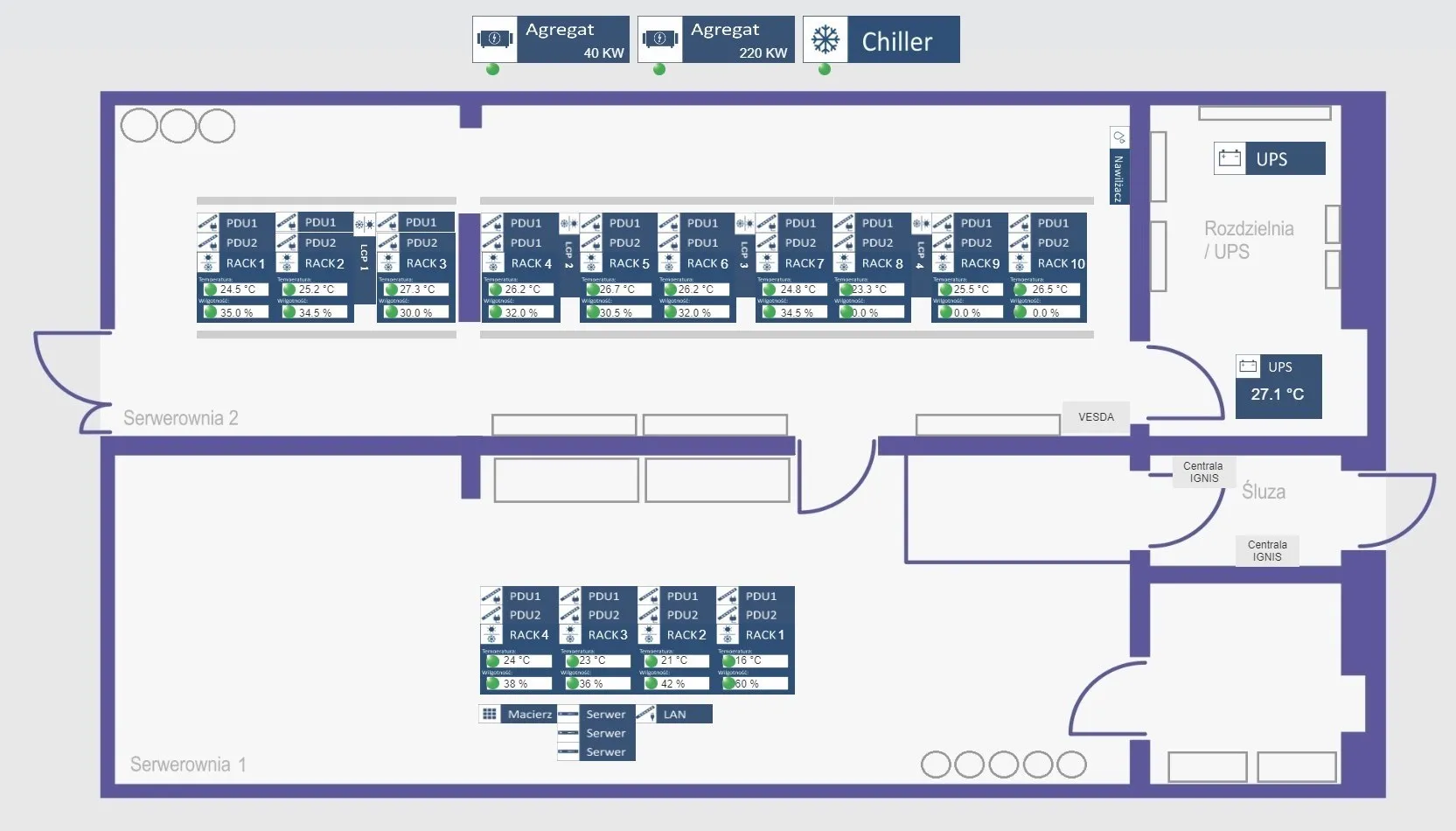
Power supply visualization in the GEMOS system — from power generators through UPS units to PDU strips.
The operator can select an element from the on-screen diagram to review the measurement value history of a given device.
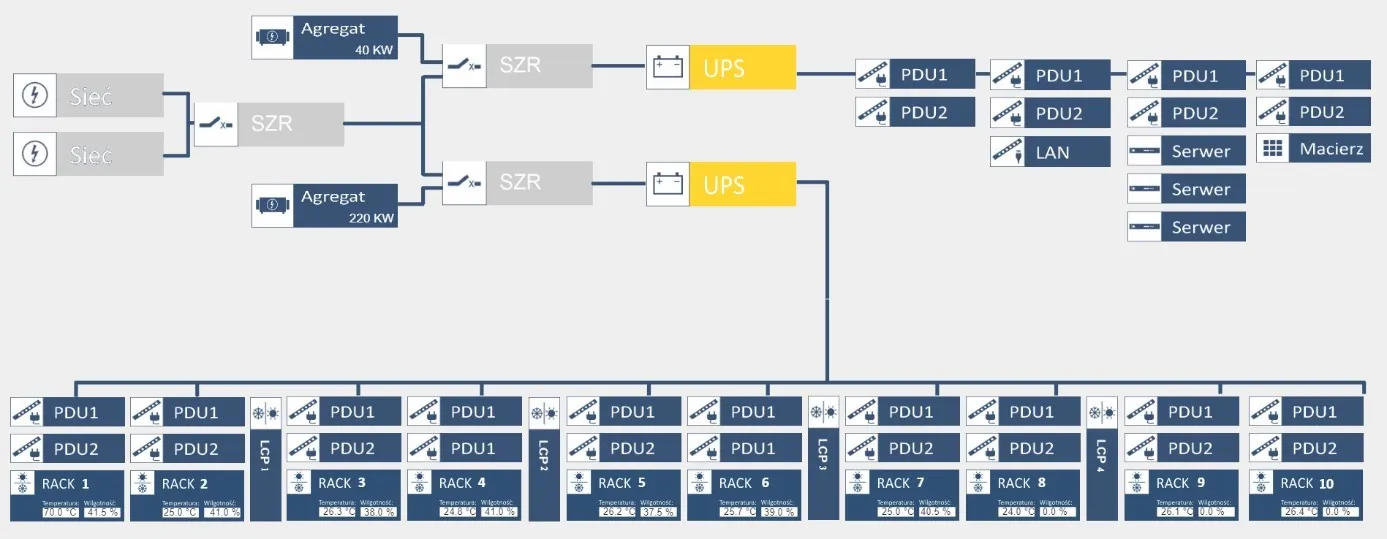
Example GEMOS visualization — monitoring generator, UPS and power strip states.
A variety of data is monitored in the power generator, enabling full control over its condition and operation.
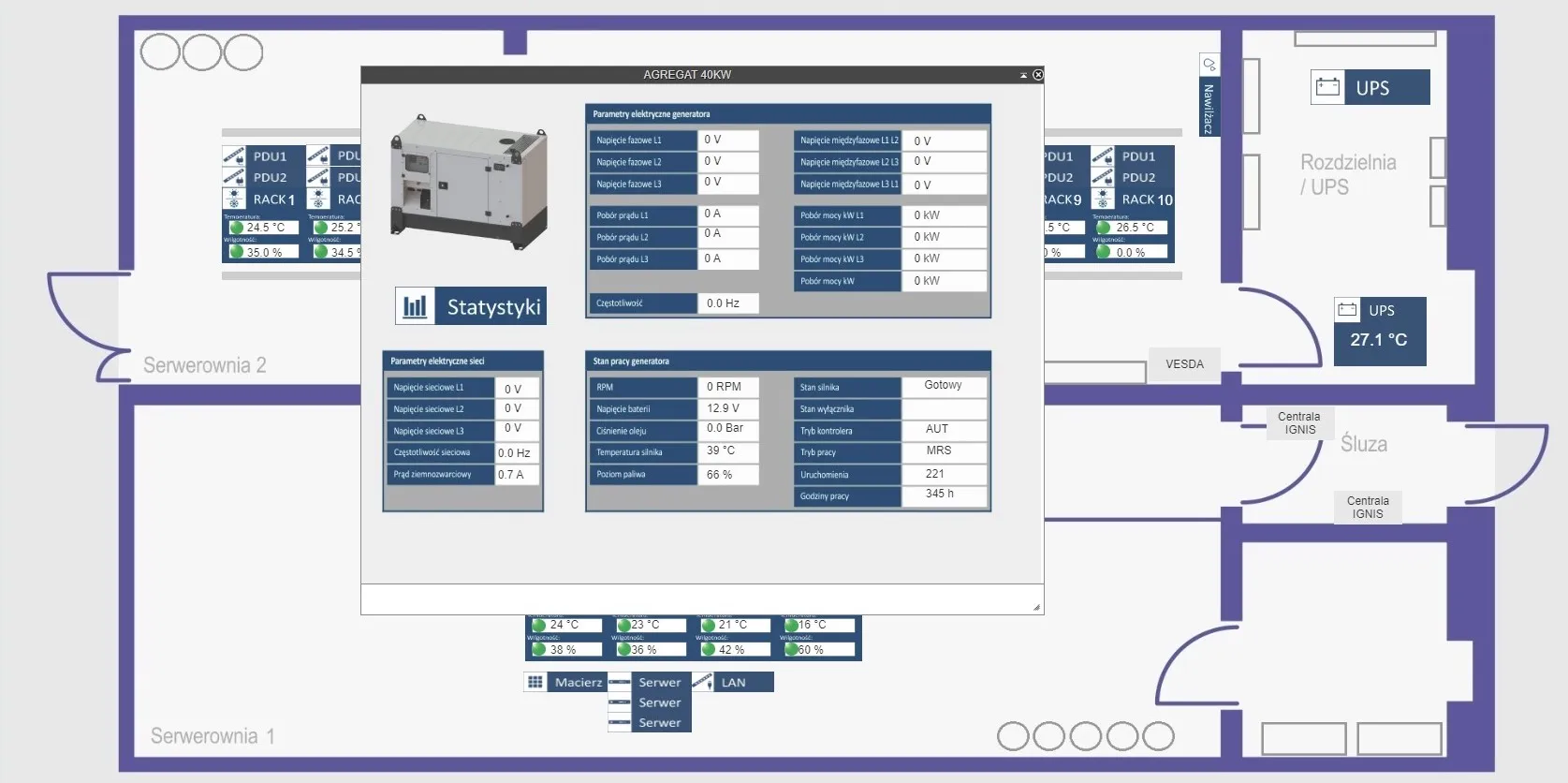
Diverse data monitored in the power generator — electrical parameters, operating status and mains parameters.
Generator electrical parameters
Phase voltage (L1, L2, L3) — voltage measured on each phase, allowing control of load balance.
Line-to-line voltage (L1-L2, L2-L3, L3-L1) — voltage measured between two phases, important for assessing power supply stability.
Current draw (L1, L2, L3) — current drawn by each phase, helping to identify overloads or uneven load distribution.
Power consumption (L1, L2, L3) — power consumed on each phase, crucial for optimizing energy efficiency.
Generator operating status
RPM (revolutions per minute) — engine rotational speed, important for maintaining proper operating parameters.
Battery voltage — starter battery voltage, ensuring system readiness to start the generator.
Oil pressure — engine lubrication pressure, crucial for engine protection and efficiency.
Engine temperature — engine operating temperature, important for preventing overheating and damage.
Fuel level — amount of fuel available in the tank, allowing refueling planning.
Engine status — general operational state of the engine, including errors and operating status.
Circuit breaker status — status of the main power switch, monitoring on/off state.
Controller mode — current controller operating mode (e.g., automatic, manual, test).
Operating mode — selected operational mode of the generator (e.g., standby, primary power).
Start count — number of start cycles, helpful in maintenance planning.
Operating hours — total generator running time, important for service scheduling.
Mains electrical parameters
Mains voltage (L1, L2, L3) — voltage supplied by the grid on each phase, crucial for synchronization.
Mains frequency — grid supply frequency, important for power supply stability.
Earth fault current — current occurring during an earth fault, helping in fault detection and response.
Statistics on changes over time periods are available for each measured value. Such analysis enables problem prediction and operational optimization.
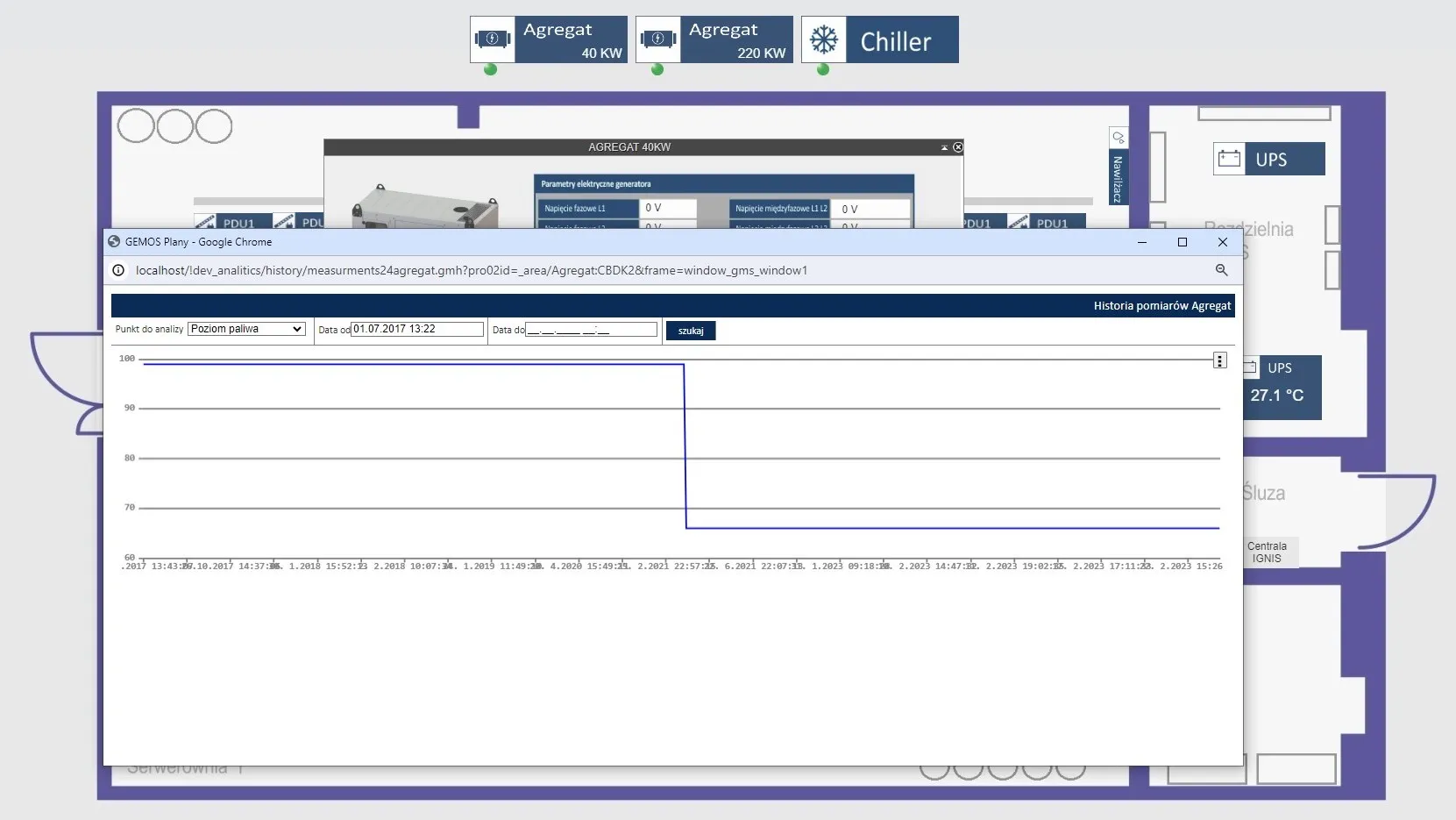
Example of monitored parameter value history — analysis of changes over a selected time period.
Alarms and notifications in the GEMOS system
The status of each element is monitored by the GEMOS system in real time. The states of monitored elements are displayed in different colors depending on the registered state.
The following colors are assigned to individual states:
- Yellow — fault
- Green — device operational, active
- Red — alarm (threshold values exceeded)
A state change requiring a response is reported as an event on the event stack. The event stack requires action by the operating staff. In the GEMOS system, procedures are created and then assigned to a given event category. A very helpful feature is the ability to attach not only procedures but all kinds of documents such as technical documentation, service protocols, etc.