

If you have already reached the stage where you know your facility needs a single platform to manage multiple security systems, the question about cost is only natural. But it is worth starting with one key point: a PSIM system is not “just another security application.” It is a platform that integrates disparate systems, correlates events, supports operators with procedures, and brings order to the way an entire facility operates. That is why the cost of implementing PSIM cannot be reduced to the price of a licence.
In practice, an investor is not buying software alone. They are buying consistent operations, faster alarm response, lower operator error risk, and better control over what is happening across the facility. This is exactly how platforms of this class are described today: as a tool for integrating fire alarm systems, CCTV, intrusion detection, public address, BMS, and fire automation into a single, coherent operational system that helps eliminate silos and improve operational efficiency.
The short answer: how much does PSIM cost?
There is no single, universal price for a PSIM implementation. The same type of platform can mean an entirely different budget in an office building, a campus, an industrial facility, or a piece of critical infrastructure.
The biggest mistake at this stage is comparing licence prices alone. For systems of this class, you need to look at the total cost of ownership — not just the launch, but also the implementation, maintenance, development, and future upgrades. That is precisely why the question “how much does PSIM cost?” is better rephrased as: what will the implementation budget consist of for my facility?
What does the cost of PSIM implementation really consist of?
1. Base licence and functional scope
The first cost component is the platform itself. What matters here is not only the choice of vendor, but also the scope of features: the number of operator workstations, required modules, the number of integrated points, and the level of interface customisation.
In practice, the licence is merely the starting point. The more areas the system needs to cover and the more complex the interdependencies between subsystems, the less sense it makes to compare offers solely on the basis of the initial price tag.
2. Integration with existing systems
This is usually one of the most significant items in the budget. PSIM makes sense when it can tie different environments into a single operational logic: fire systems, video surveillance, access control, perimeter systems, building automation, and sometimes other data sources as well. The more integrations there are, the more design work, testing, and implementation risk is involved.
This is also where the difference between a “new” facility and one that has been “living for years” most often emerges. In existing facilities, the issue is not PSIM itself, but the quality, age, and openness of the systems already in place. Some integrate smoothly, some require workarounds, and some may need modernisation.
3. Hardware infrastructure and IT environment
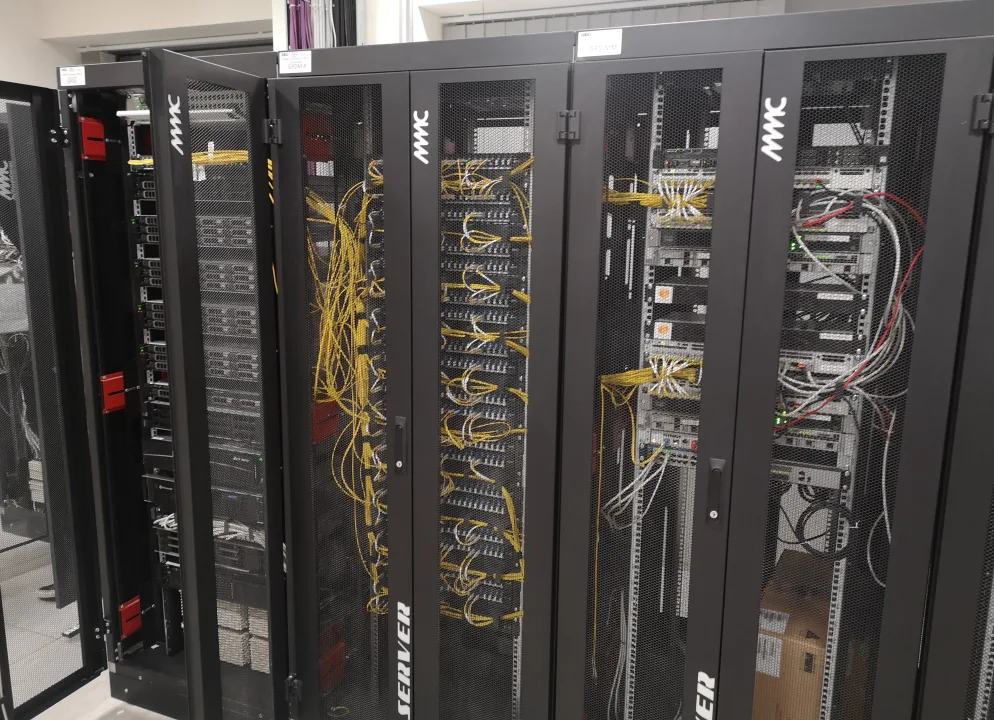
PSIM does not operate in a vacuum. You need to plan for servers, operator workstations, networking, archiving, environment security, backups, and system availability requirements. In simpler deployments, this will be a relatively small part of the budget. In environments with high continuity requirements, it can be a very significant element.
A common mistake at the outset is assuming that since “it is just software,” the infrastructure will be secondary. In practice, it is precisely the infrastructure that later determines system stability and operator comfort.
4. Engineering services and operational logic
This is the area that determines whether the system will be a genuinely used tool or merely an impressive visualisation. PSIM platforms do not stop at collecting alarms. Their strength lies in event analysis, information correlation, and guiding personnel through operational procedures. This means designing workflows, priorities, dependencies, screens, maps, and response scenarios.
This is exactly why implementation services very often have a value comparable to the licence itself. When an investor asks about the price of the system but does not ask about the operational logic of the facility, they usually end up with an inaccurate picture of the budget.
5. Maintenance, support, and development
The project does not end at go-live. The system needs to be updated, serviced, developed, and adapted to changes in the facility. This means ongoing costs for vendor maintenance, integrator support, configuration changes, and future expansions.
This is a critical decision point: does the organisation just want to “launch a system,” or does it want to build a platform that will work alongside the facility for years? If it is the latter, the cost should be assessed over a multi-year horizon, not solely through the lens of the implementation invoice.
6. Operator and administration training
A unified interface and procedures are a tremendous asset, but only when people know how to use them. That is why training is not an add-on — it is part of the project. It applies to operators as well as to the people responsible for administration, maintenance, and system development.
If personnel are expected to work faster and make fewer mistakes, time and budget must be allocated not only to technology but also to preparing people to work in a new model.
What drives up the cost of PSIM the most?
Most often it is not the platform itself, but the scale of complexity on the facility side. The budget grows particularly when:
- the facility runs many systems from different manufacturers,
- some installations are old or poorly documented,
- operational procedures exist only “in people’s heads,”
- security needs to be linked with building services,
- high availability and system resilience are expected.
The more of these elements are present simultaneously, the more PSIM becomes an organisational project rather than a purely IT one.
Where should you not cut corners?
Pre-implementation analysis
This is the cheapest way to avoid the most expensive mistakes. A good analysis answers not only what can be integrated, but also why, who will use the system, and according to what procedures it should operate.
Operator ergonomics
A system can be technically correct and operationally inconvenient at the same time. If handling multiple events is still complicated, the investor will not achieve the purpose of implementing PSIM: shorter response times and fewer errors. Ela-compil explicitly promotes this direction as ergonomics and work organisation supported by a modern management platform.
Integration testing
In complex systems, this is not a formality — it is the moment when the truth about project quality comes out. The more interdependencies between subsystems, the more important it is to verify them in real-world scenarios rather than just “on paper.”
How to approach the budget sensibly?
The most practical approach is to break the project into three questions:
- Which systems should be covered by integration?
- Who will use the system, and in what working model?
- What costs will arise after go-live?
Only after answering these questions is it worth expecting a credible estimate. Without that, the investor gets, at best, the price of the platform — but not the price of the implementation.
Does PSIM always pay off?
Not in every facility and not at every point in time. If the number of systems is small, procedures are simple, and operators have no trouble managing the environment, a full PSIM platform may be an overly elaborate solution.
But when an organisation already has many independent systems, alarms are handled manually, delays occur, and every incident requires “switching between different applications,” the cost of not integrating begins to exceed the cost of the implementation itself. In such situations, PSIM stops being a technology expense and becomes a tool for managing risk and operational workflow.
Summary
The cost of implementing a PSIM system must be assessed more broadly than just the licence price. The budget is determined above all by the scope of integration, the quality of existing systems, the complexity of procedures, operator requirements, infrastructure, and the maintenance model.
That is why the best opening question is not “how much does a PSIM system cost?” but rather: “how much will it cost to bring my facility’s security and building services into a single, coherent operational model?”
It is only from that answer that credible investment planning can begin.
FAQ
- Does PSIM implementation require replacing all existing systems?No. In many cases, PSIM is implemented precisely to unify the management of systems already in place. Problems arise mainly when some solutions are very old, proprietary, or require modernisation.
- Can PSIM be implemented in stages?Yes, and in many facilities this is the most sensible approach. You start by covering key systems and scenarios, then expand the platform with additional integrations and procedures.
- What should you prepare before talking to a PSIM vendor?A list of systems to integrate, information about their age and manufacturers, a description of the most important alarm scenarios, operator requirements, and expectations regarding post-implementation system maintenance. The better this is described, the closer you will get to a realistic estimate.