
A PSIM system helps manage building security only when it stays current, maintained and aligned with reality. Security system integration alone is not enough if no one is accountable for maps, procedures, alarm scenarios and change coordination after go-live. That is why PSIM should be treated not as a one-off project, but as a continuous security management process.
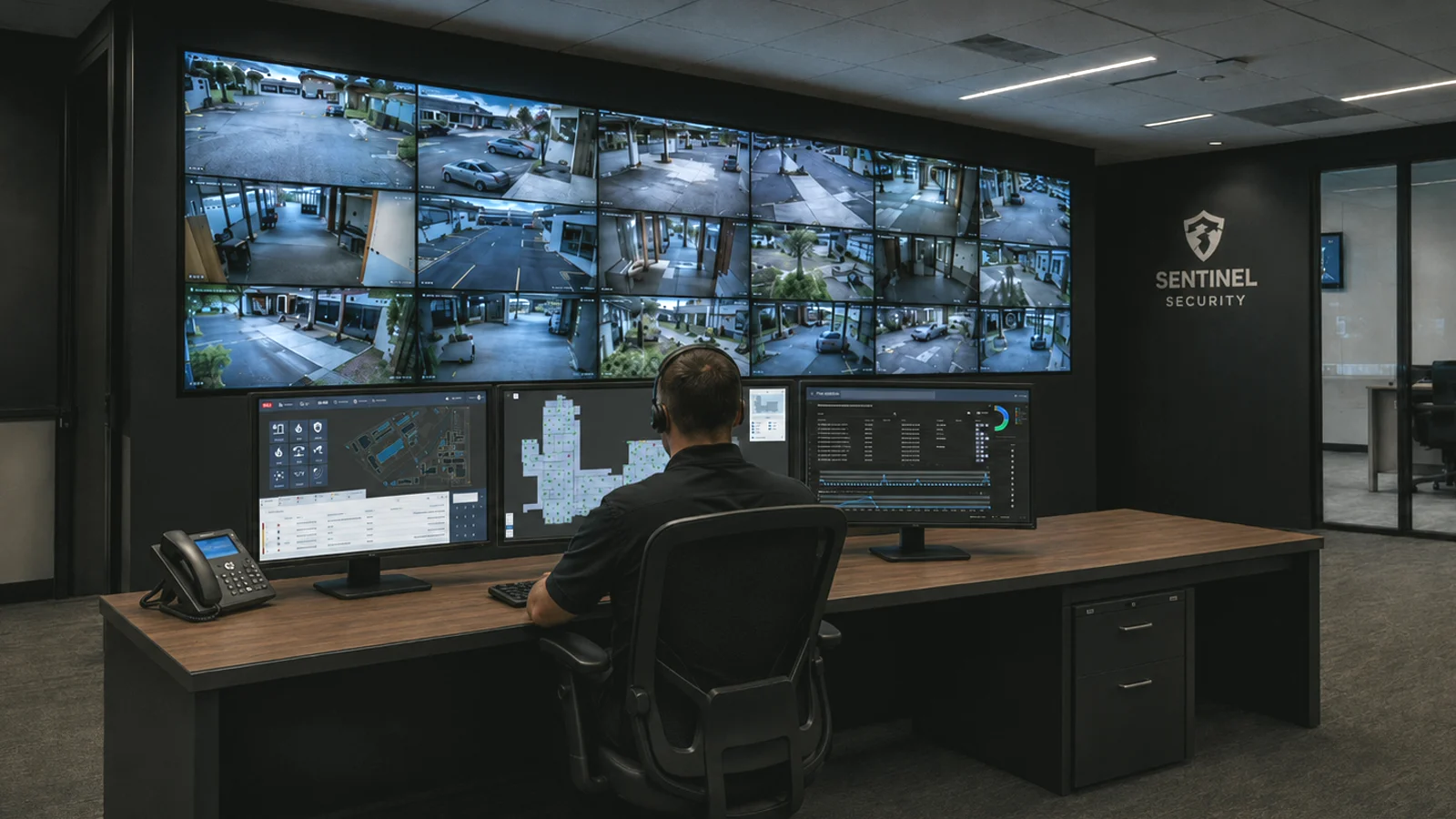
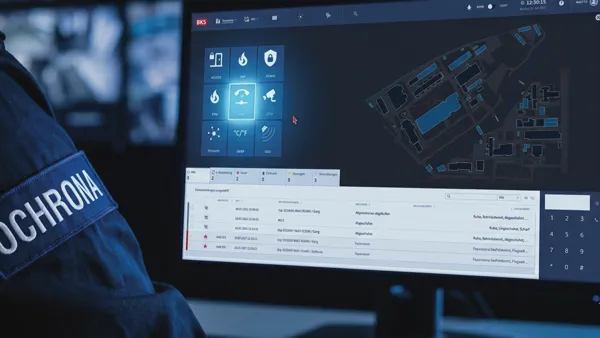
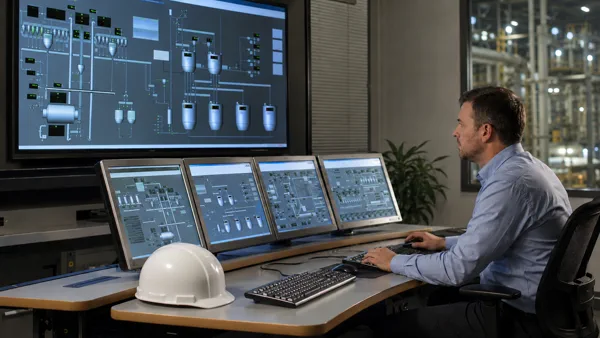
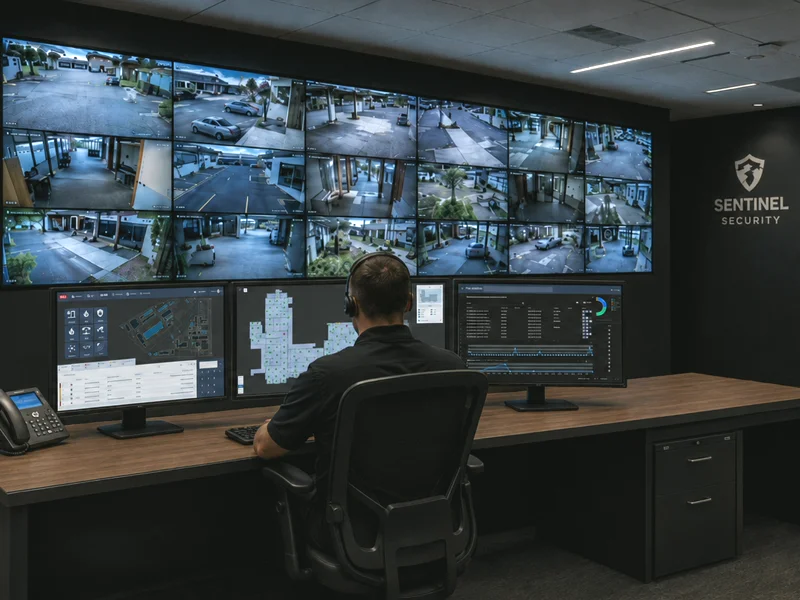
A control room where PSIM brings together information from many systems — its effectiveness depends on whether what is on screen still matches what is in the building.
What is a PSIM system?
PSIM (Physical Security Information Management) is a platform that integrates a range of security and technical systems into a single operator environment. As a result, operators can assess situations more quickly, see incidents on the building map, launch the right procedure and coordinate the response of security, technical or administrative teams.
In practice, a PSIM platform organises information from many sources: video surveillance (CCTV), fire alarm systems (FAS), intrusion and hold-up alarm systems, voice evacuation systems, BMS and other building technical systems. For a fuller picture of the PSIM class and why it matters for large facilities, see our article on what PSIM is.
Why a PSIM system is not a “plug & play” solution
Decision-makers often want a solution that “closes the security topic” with a single purchase. But PSIM is not a “box” that you buy once and forget about. It is a management tool that loses its value the moment it stops reflecting the truth about the building.
Security cannot be “signed off” with technical acceptance; it has to be constantly adjusted as the environment changes.
Security system integration depends on up-to-date data
The biggest risk is a system that runs on outdated data. Imagine a fire alarm: the system shows the shortest intervention route, but in reality a new partition wall has been standing there for months. Technically the system worked, yet in a real incident it did not help — it could even mislead the response.
In a crisis, outdated information is sometimes more dangerous than no information at all.
The building changes, so the PSIM system has to change with it
Every large building is in constant flux. New partitions go up, tenants change, rooms and service areas are rebuilt. Procedures and traffic flows shift as well. For facility management this is routine administration, but for the security system these are critical changes.
If the system cannot keep up, a gap opens between what the screen shows and what is actually there — and that gap becomes a real risk.
Maintaining a PSIM system: maps, procedures and operator data
If, after handover, no one is responsible for keeping the data current, the system slowly loses value. Once operators stop trusting what they see on screen, they fall back on private notes or “memory”. That is the moment the system stops being a tool and becomes a burden.
Effective maintenance requires regular reviews of maps, scenarios and permissions.
Total Cost of Ownership: what does a neglected PSIM really cost?
From a financial perspective, a PSIM system is an asset whose value depends on remaining trustworthy over years. Lack of maintenance creates technical debt. The question for a CFO should not only be “How much does deployment cost?” but also “How much will it cost to keep this system credible?”
Routine service and data hygiene are far cheaper than a later “resuscitation” of the system. We cover the cost structure and hidden line items in detail in our article on the cost of a PSIM deployment.
Software Maintenance and change coordination
Software Maintenance in a PSIM system is not just about installing new software releases. It is the ongoing process of verifying that integrations still work after the underlying systems are updated. This requires coordinating the work of different vendors so that an update to one part of the infrastructure does not weaken the whole.
An important part of this process is also Hardening — the continuous strengthening of the system’s digital resilience against modern cyber threats — which we cover in more detail in our article on PSIM cybersecurity.
The illusion of readiness
That creates a false sense of security on paper, while real security plays out in a specific situation under time pressure. The GEMOS PSIM platform proves itself exactly where the operator cannot afford any gap between the screen and the building — provided that ongoing maintenance is a permanent part of how the system is run.
Who owns the PSIM system after go-live?
This is the key question for every facility manager. Who specifically updates the maps after a refit? Who approves changes to procedures? The system needs a process owner, not just a technical administrator.
When no one is named as accountable, the risk begins the moment the acceptance protocol is signed.
Checklist for the facility manager
| Key control area | Verification question |
|---|---|
| Accountability | Have we designated an owner of the PSIM process? |
| Data updates | Does every change in the building trigger a system update procedure? |
| Procedure alignment | Do the scenarios in the system match current security instructions? |
| Coordination | Are updates to other systems coordinated with the PSIM administrator? |
| Testing | Is the system regularly exercised in realistic scenarios? |
Summary: PSIM as a process
A PSIM system can be one of the most important tools in a large building, but its effectiveness is not granted once and for all. On the day of handover the system is only beginning its life. Effective security is a combination of technology, procedures and ongoing administration.
A system that cannot be trusted does not protect — it only creates the impression of protection.
FAQ
- Is a PSIM system something you deploy just once?No. It is a process that requires ongoing maintenance and updates in order to remain trustworthy.
- Why are map updates so important?Because an incorrect map can direct emergency services into a dead end during a real incident.
- What happens if Software Maintenance is neglected?It creates technical debt and erodes operator trust in the information the system displays.